Braiin is an Australian artificial-intelligence technology company whose businesses span agriculture, customer experience and property technology. In its February listing announcement, it described an organization of approximately 800 employees across seven countries. That is a company-reported snapshot, not a newly verified headcount. It helps explain why a move toward defence robotics represents an extension of an operating technology business rather than the creation of one from scratch.
The stock’s latest appearance on a gainers screen comes with a new company announcement about an AI award, alongside yesterday’s defence robotics news. The exciting version of those headlines and the verified version are not quite the same.
The price move and the actual news
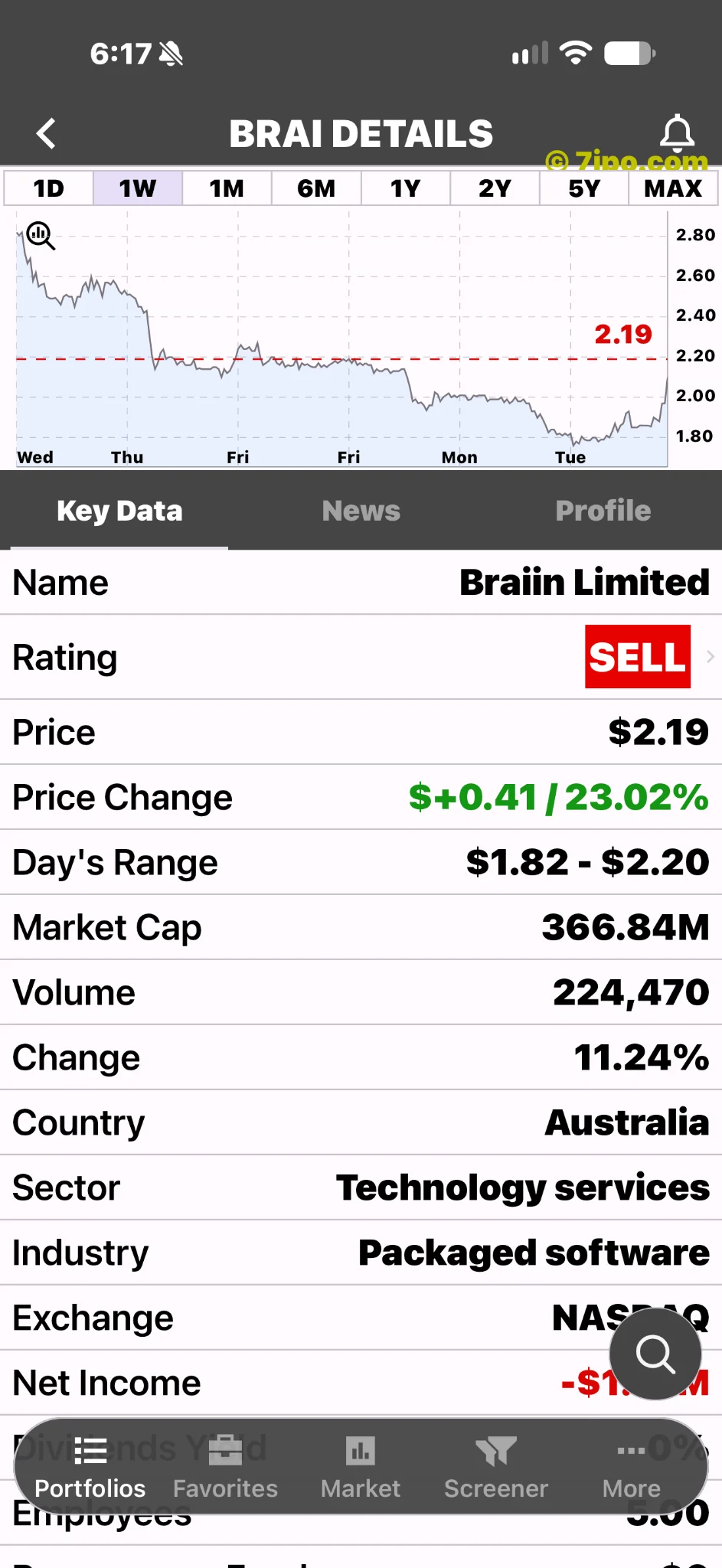
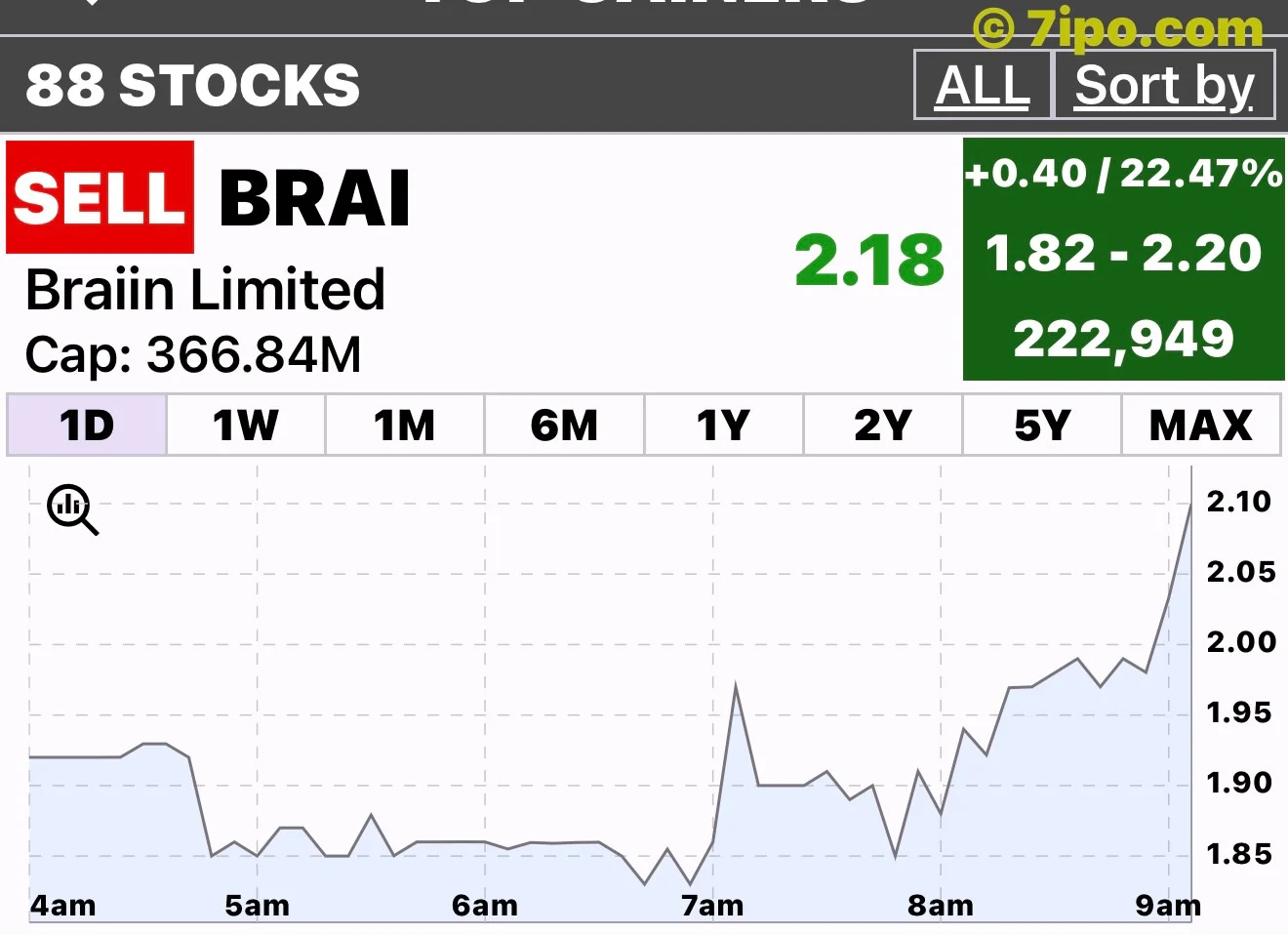
The selected November 11 screenshot shows BRAI at $2.18, up 22.47%, with displayed volume of 222,949 and a range of $1.82–$2.20. Its daily chart spans roughly 4–9 a.m., consistent with a premarket snapshot. These are dated app figures, not an independently verified live quote; the volume counter’s session is not specified. A later detail screen shows $2.19 and 23.02%. We use the selected cover’s figures consistently rather than combining different snapshots.
Braiin’s November 11 announcement says its ARIA real-estate AI platform won Polirian’s 2026 Best Enterprise-Ready AI Platform Award. The award issuer’s own announcement is dated November 9: the company’s publicity is new today, not necessarily the recognition itself. Polirian describes software for coordinating property workflows with human review of important decisions. That is recognition of a platform, not a disclosed customer order or a measurement of resulting sales.
A November 10 company release announced Braiin as presenting partner of the Defence Robotics & Counter-UAS Congress on November 12, within Global Drone 2026 in Australia. Robotics chief Rob Sutton was scheduled to lead sessions involving defence officials. The announcement did not disclose a government order, a contract award, new revenue or a product approval.
That is the essential distinction. Access to a relevant industry audience can be commercially useful. It is not the same thing as a purchase order.
Why the story can attract attention
For investors, the attraction is the possibility that existing technology could find additional applications and customers. Defence-related robotics offers an understandable narrative: a company presents its capabilities to people who may evaluate them for demanding uses.
Our view is that this is worth following, but not worth inflating. A conference can provide an introduction; the next evidence would be a disclosed customer relationship, a documented deployment or financial results showing a contribution. Until then, the commercial opportunity remains a proposition rather than a measured outcome.

The award publicity and defence event are plausible contributors to interest in BRAI. We have not verified that it caused the entire price movement, and the screenshot cannot establish that connection on its own.
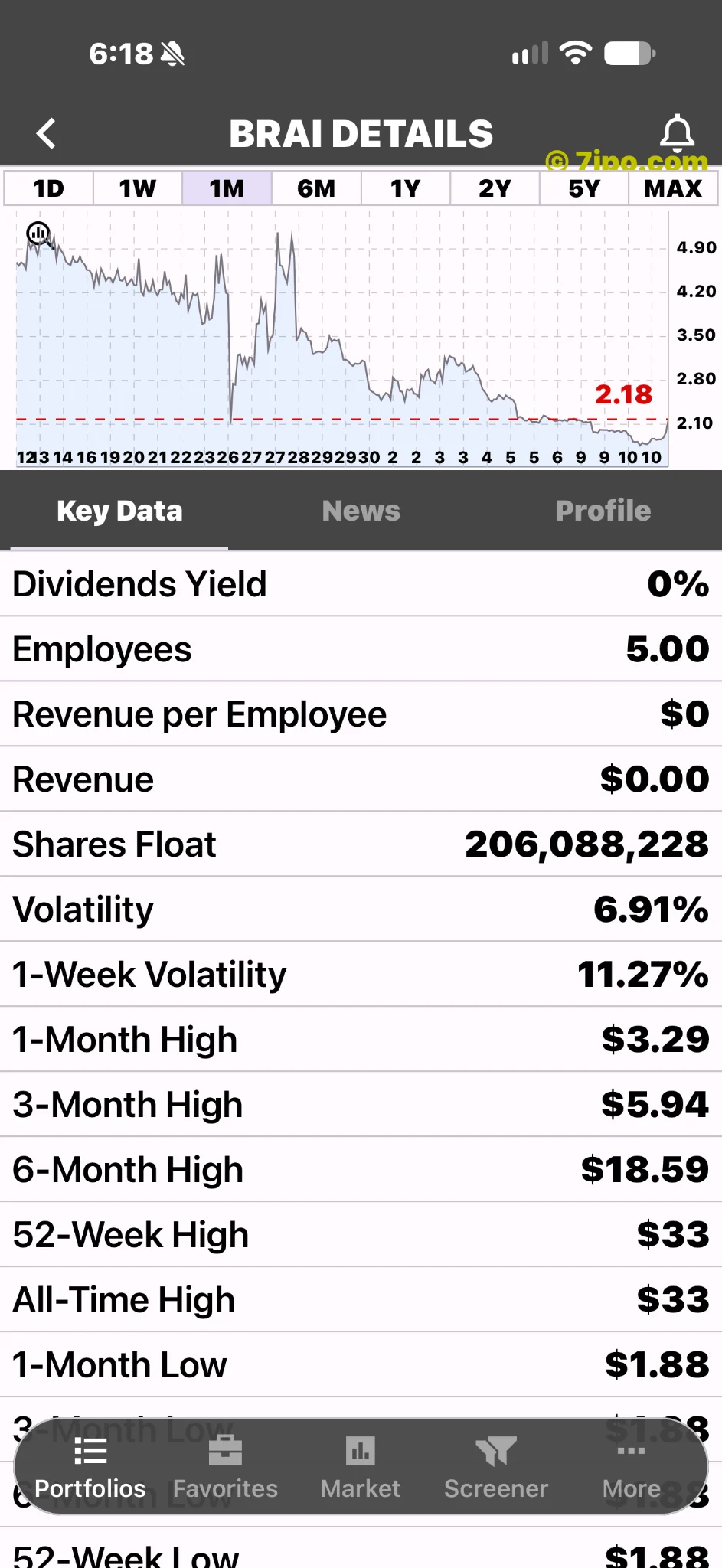
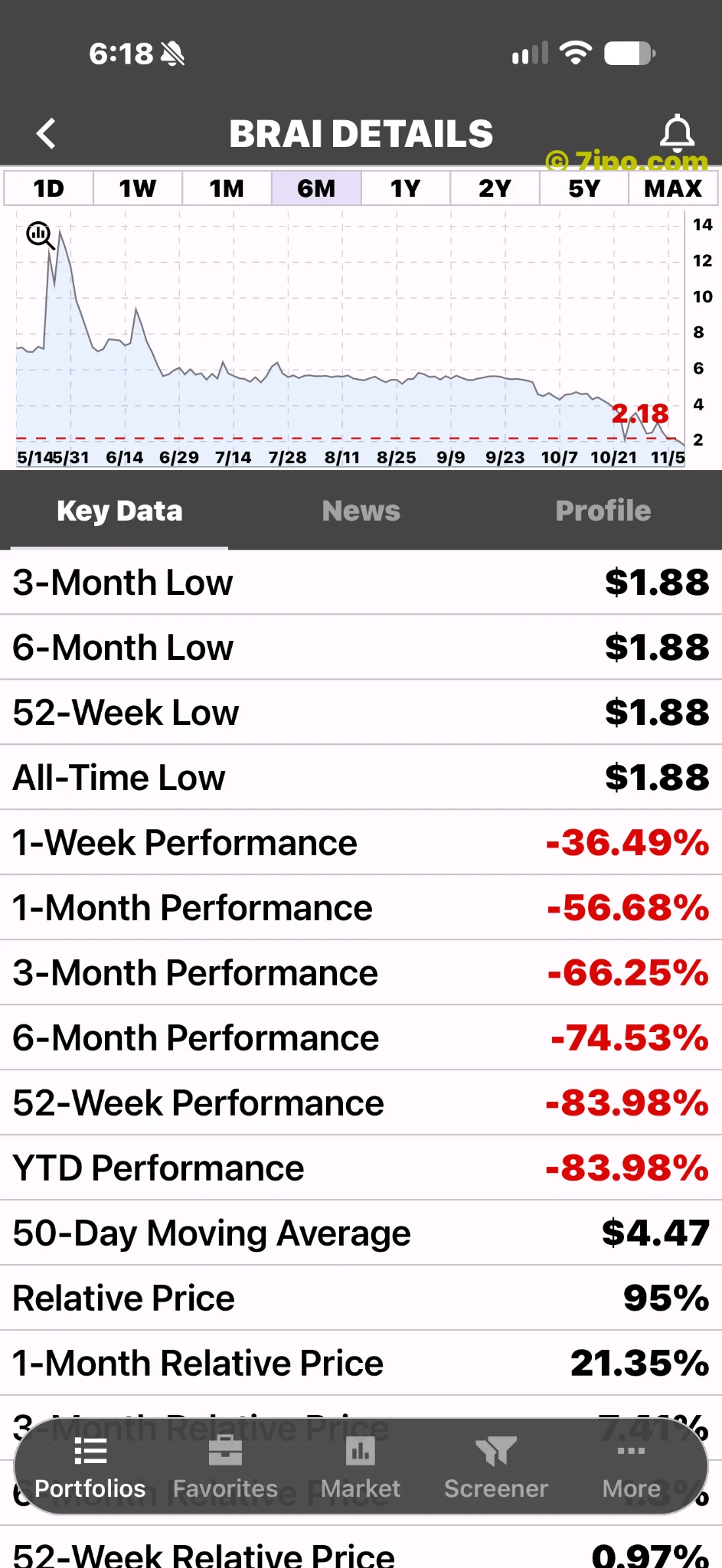
The longer chart is a useful counterweight to the morning excitement: it shows a prolonged decline before the latest bounce. A sharp one-day recovery does not by itself establish a lasting turnaround. The commercial test is whether attention becomes repeatable business, rather than whether the next headline sounds more impressive than the last.
A recent listing, with an important distinction
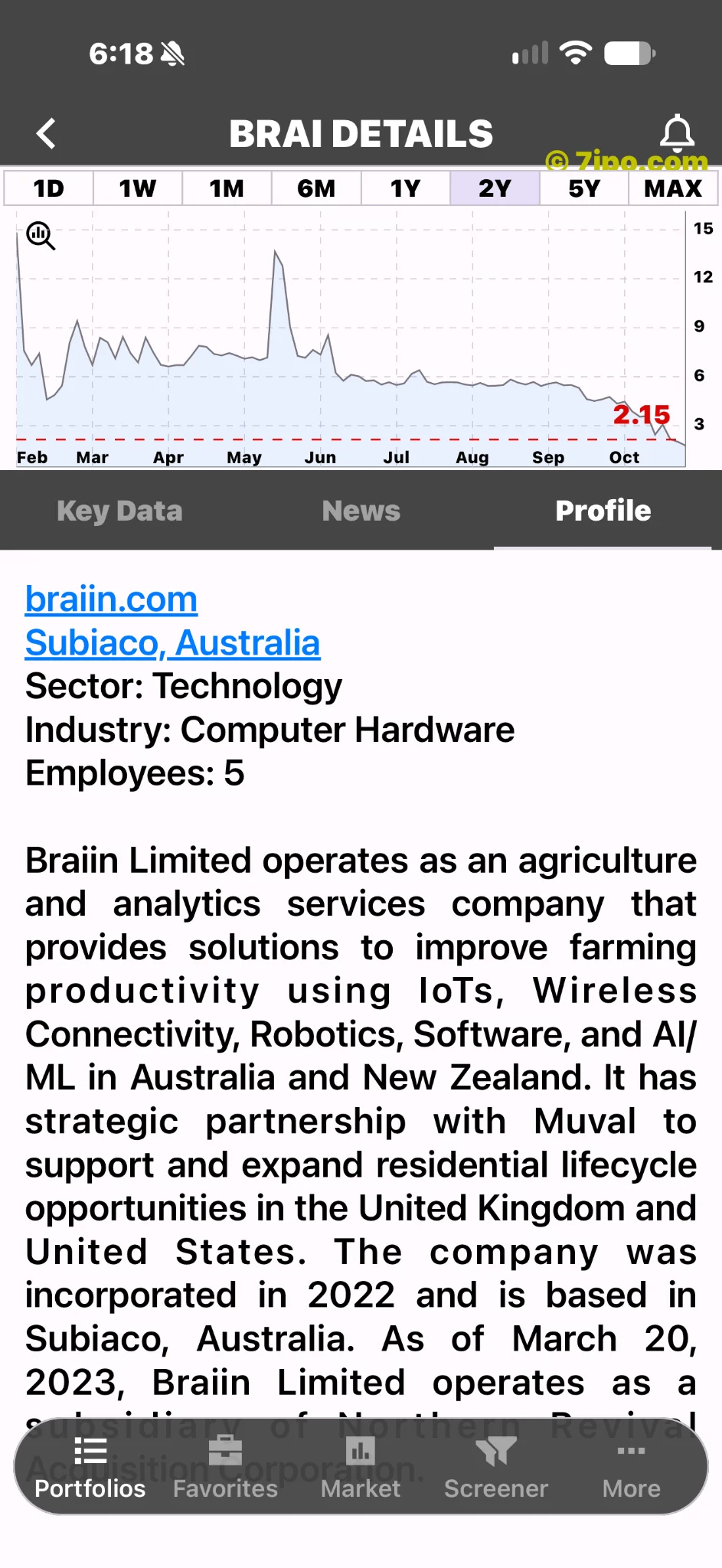
Braiin’s February announcement described a Nasdaq direct listing, not a conventional IPO raising new capital from an offering. We cover it here as a recent public-market arrival, while preserving that distinction. Listing method matters because the story should not imply that a new financing funded this week’s defence initiative.
For readers following IPO-Stocks.app, the useful next question is simple: what follows the event? The positive development is visibility for a concrete business initiative. The risk is mistaking visibility for commercial validation. BRAI’s green screenshot makes a strong opening scene; a disclosed contract or operating result would give the story a much stronger second act.