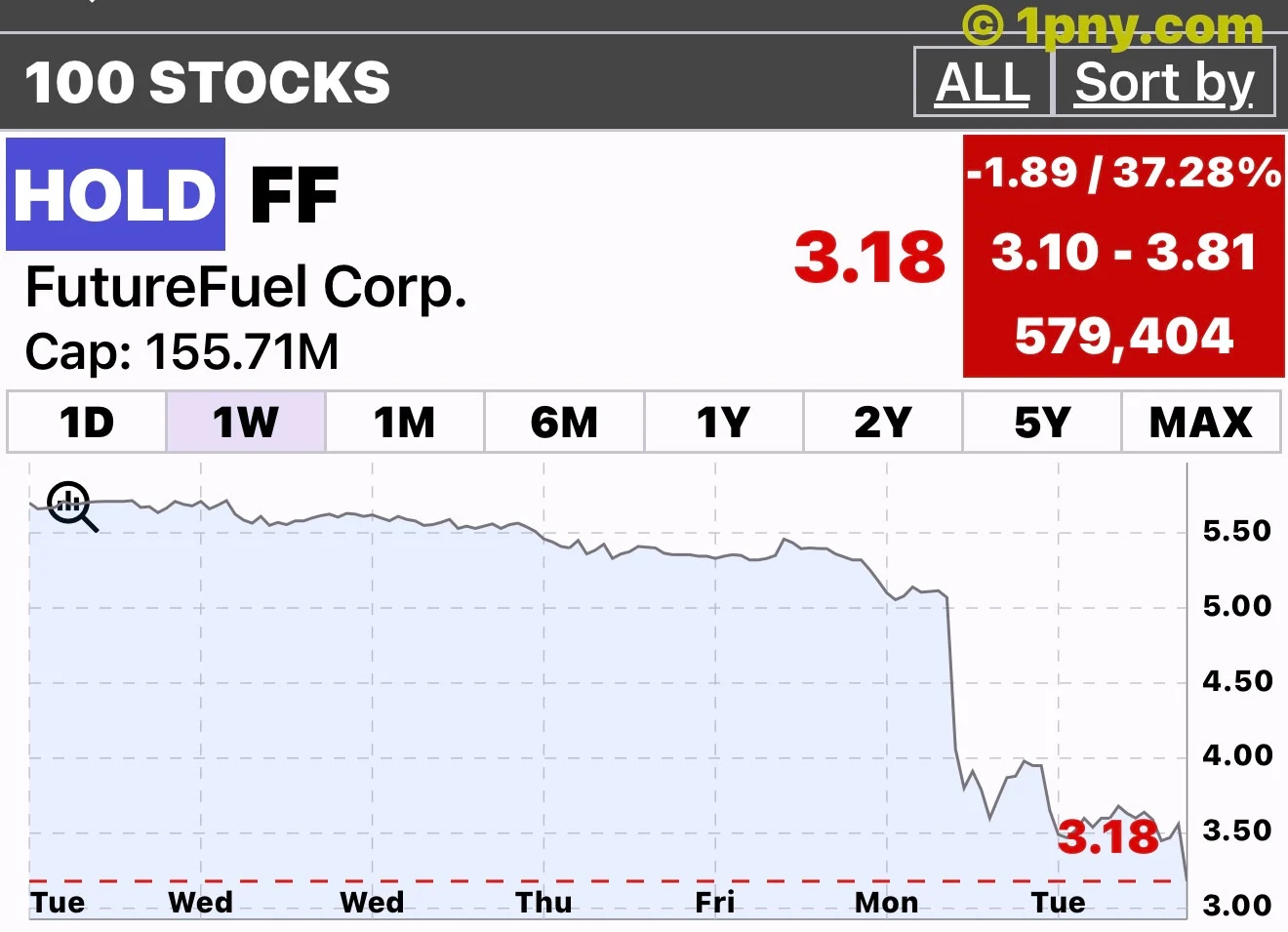
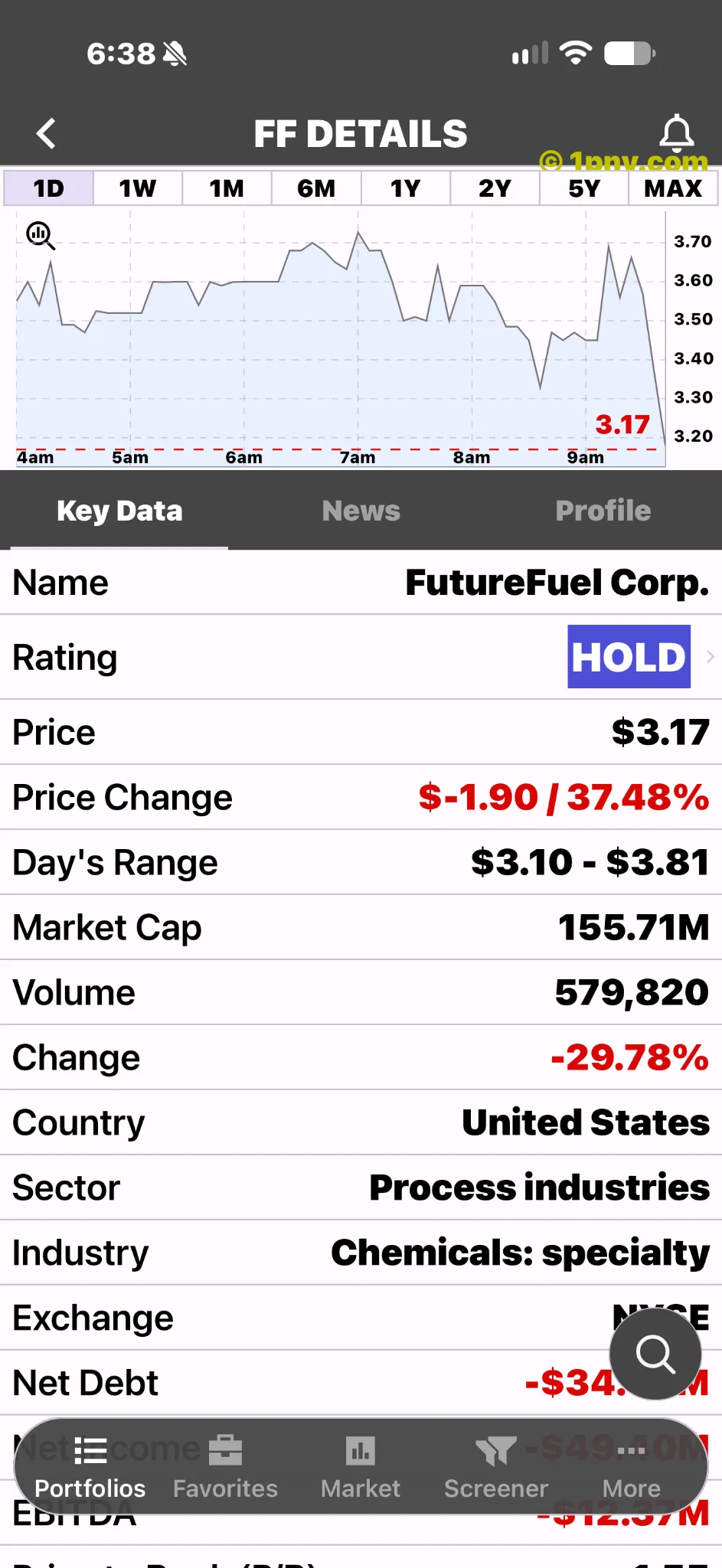
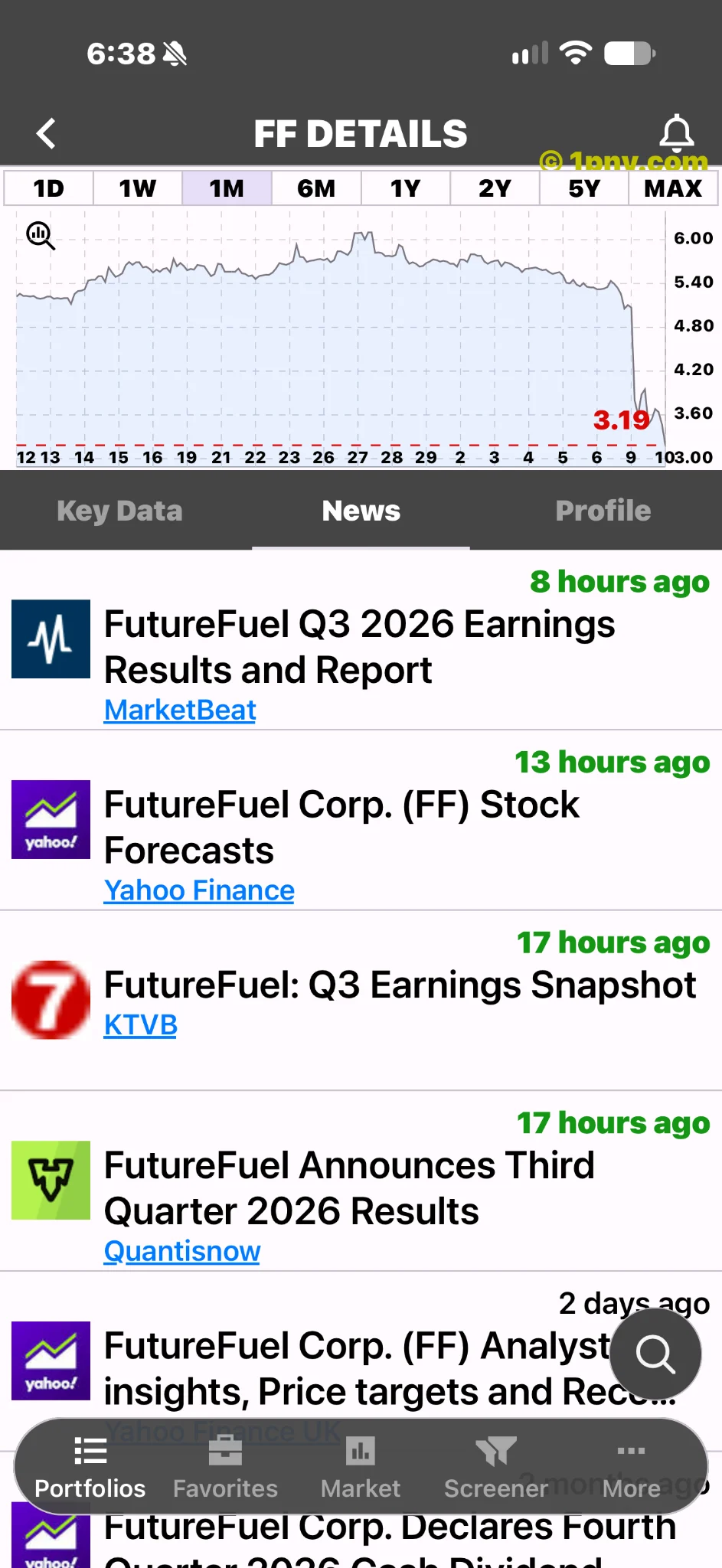
FutureFuel’s November 9 quarterly report tells a frustrating story: business was coming back, but the financial reward was still missing. Sales were much stronger, yet the company remained unprofitable. The supplied market snapshot showed FF at $3.18, down 37.28%. That is a captured quote, not a verified closing price, but it conveys the severity of the selling around the update.
The encouraging part is that FutureFuel had more business to work with. The troubling part is what remained after the costs of doing that business. Our assessment is that the gap between those two outcomes deserves more attention than the sales headline alone.
A recovery that has not reached the bottom line
The September filing reports quarterly revenue of $104.7 million and a net loss of −$8.4 million. The loss narrowed from a year earlier. That improvement is welcome: it would be misleading to tell this story as one of widening net losses.
Still, a smaller loss is not the same as a profitable business. More orders and higher sales give a company something to build on, but shareholders ultimately need those sales to leave money behind. That is where this recovery remains disappointing.
Management pointed to chemicals maintenance, expensive biofuel inputs and derivatives losses. The earnings release reported negative adjusted EBITDA of $4.9 million. These disclosures help explain why the stronger sales figure failed to translate into a satisfying result. They also leave an important question: how much of the pressure will fade, and how much will keep following the business into its next quarter?
The cash story is harder to celebrate
Quarterly operating cash outflow was $10.3 million, while cash and equivalents stood at $21.3 million on September 30. In our view, this is the more concerning side of the report. A recovery becomes much more convincing when additional activity starts supporting the balance sheet rather than consuming cash.
That does not mean the cash balance alone proves a funding crisis. Working-capital needs, available financing and future receipts all matter. Businesses can pay for inventory before selling it, and customers can pay after revenue has been recognized. Accounting earnings and cash flow therefore need not move together within a single quarter.
Those timing differences deserve examination, not automatic dismissal or reassurance. The useful test is whether cash consumption eases as the business progresses. More revenue would be encouraging; more revenue that consistently generates cash would be substantially better.
A better quarter is promised, not delivered
Management forecast about $7 million of fourth-quarter adjusted EBITDA and positive adjusted EBITDA for the full year. That is a welcome prospect after the latest negative result. It gives investors a concrete benchmark against which to judge the next chapter.
But the forecast is not a completed result. Our view is that management deserves credit for setting out an improvement target, while investors are right to demand evidence that it can be achieved. Adjusted EBITDA is a non-GAAP measure; even success on that measure would not replace the need to examine reported profit and cash flow.
What the falling chart does not explain
The supplied one-week chart captures the price weakness, not the identities or motives of the sellers. Its displayed percentage should not be relabeled as a weekly return simply because a one-week view is selected. It does not establish a verified closing-price series either.
The earnings announcement is the clearest documented catalyst accompanying the decline. Concerns about profitability and cash conversion offer a reasonable interpretation, but the evidence does not prove one precise cause for the entire move.
FutureFuel’s story therefore contains a real positive and an unfinished challenge: sales improved and the net loss narrowed, but the business still needs to turn that progress into lasting financial strength. A lower share price does not complete that work for it.
For information only. Not investment advice.