Iambic Therapeutics develops medicines using AI and laboratory experimentation. The clinical-stage company reported 171 full-time employees as of September 18, 2026, and $12.753 million in collaboration revenue for the first half of 2026. These are partnership revenues, not evidence of an established medicine-sales business. SEC prospectus.
Attention is not validation
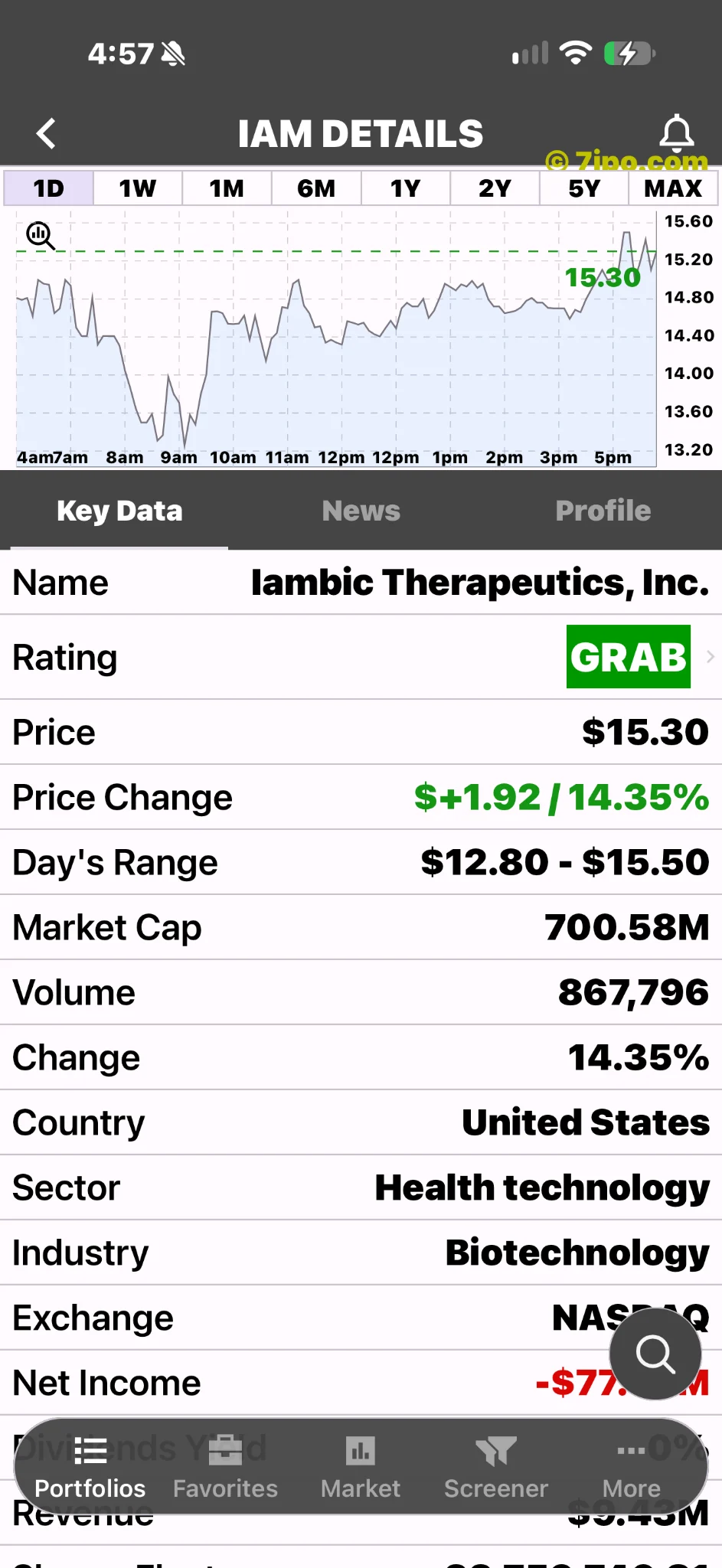
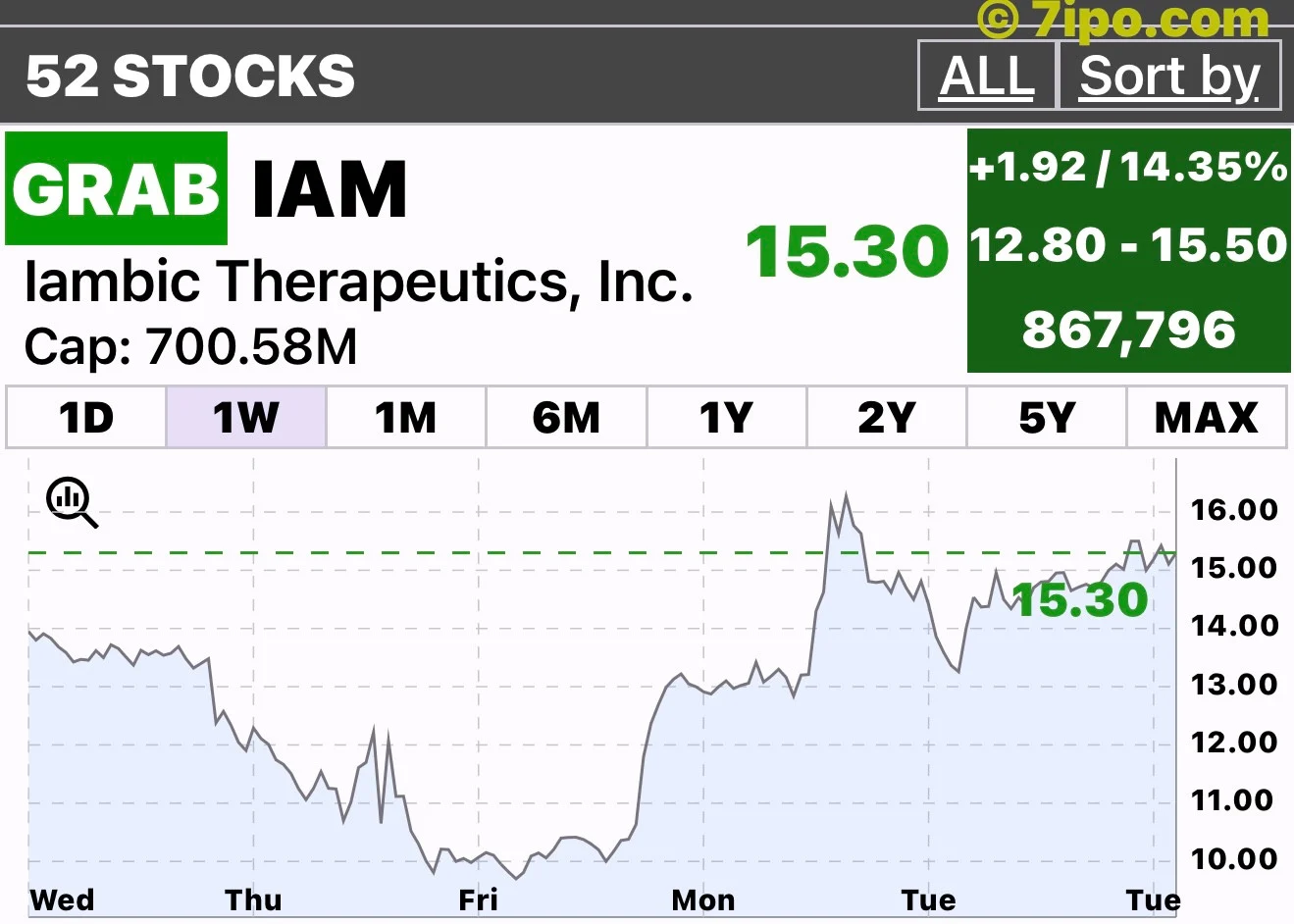
The supplied IAM chart shows $15.30, a quoted gain of 14.35%, and an approximately $700.58 million market capitalization. Those figures belong to this screenshot, not a current independently verified quote. Its capture date, time zone and closing status are unconfirmed. The selected “1W” chart view does not establish that 14.35% is a weekly return.
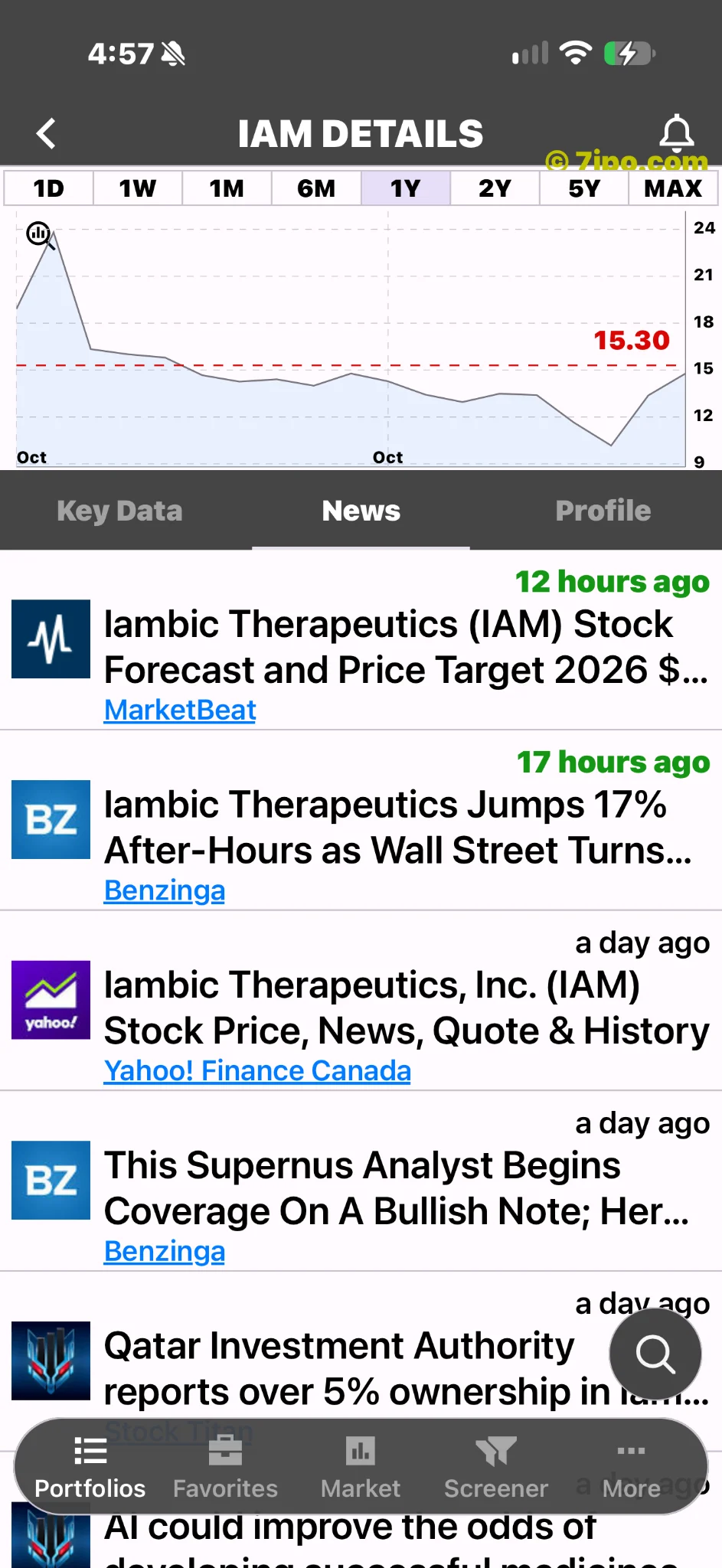
There is identifiable November news to examine. On November 9, Investing.com reported that BofA initiated coverage with a Buy rating and a $30 price target, highlighting the company’s AI-based drug-design approach. That is an analyst opinion, not a guaranteed destination for the shares. Coverage report.
The distinction matters: a new research report can bring a recently listed company to more investors’ attention without changing the underlying clinical evidence. It is a plausible sentiment factor, not proof of what caused this undated snapshot’s gain.
The IPO benchmark and the harder question
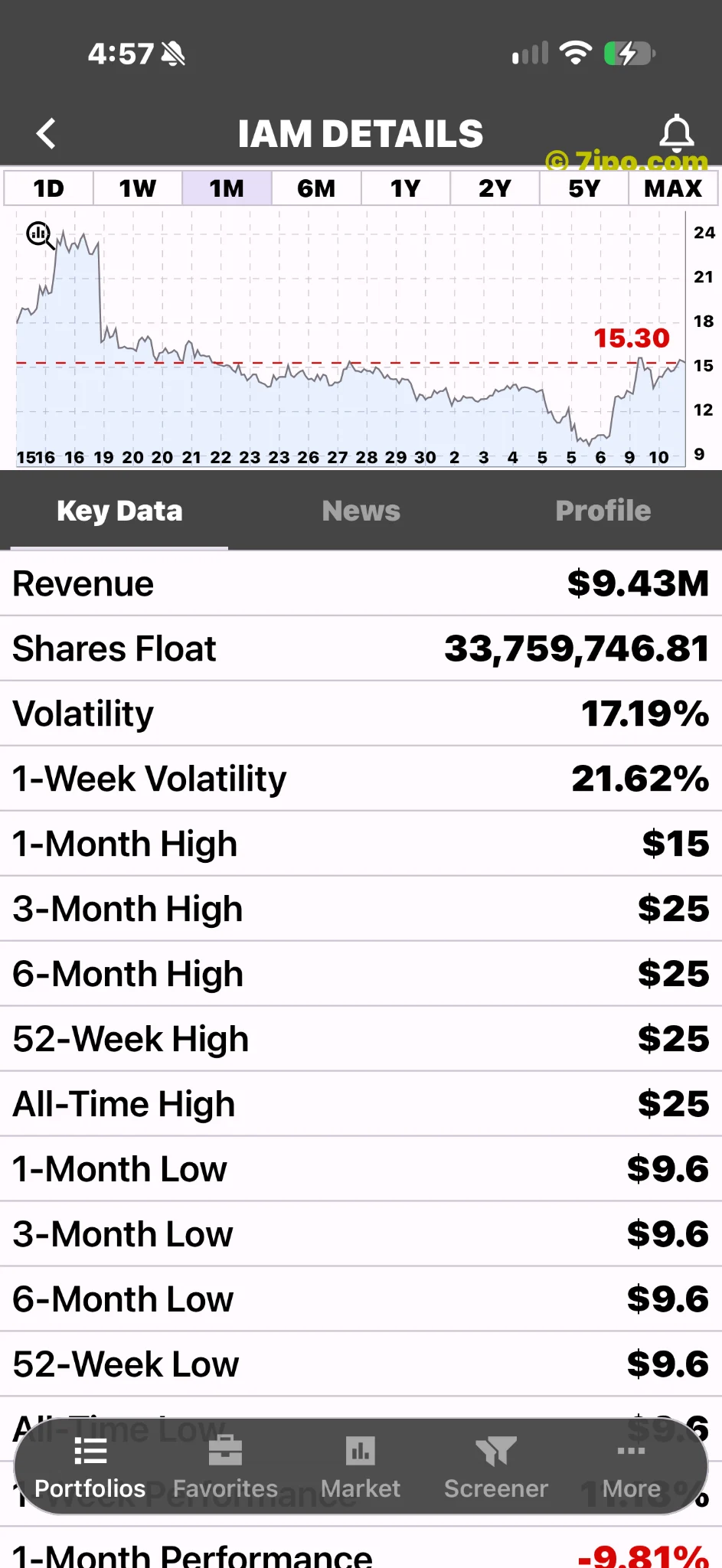
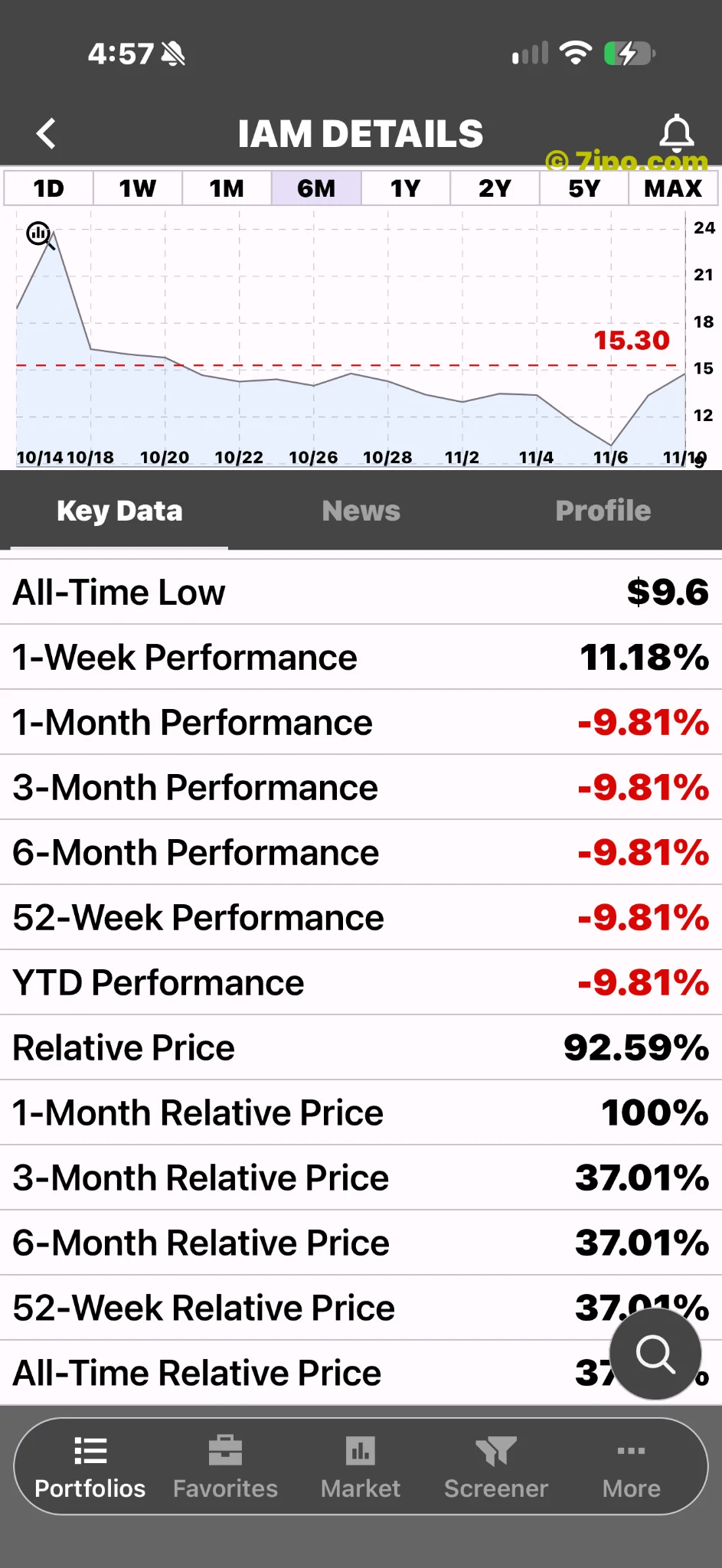
Iambic priced its October IPO at $16, raising $150 million before fees and expenses. The supplied $15.30 quote is approximately 4.4% below that offering price. IPO announcement.
As of September 2026, its lead program IAM1363 was in a Phase 1/1b trial for HER2-altered solid tumors. Early-stage testing is not regulatory approval. Prospectus.
The investment question is therefore bigger than whether AI can generate promising molecules: can those molecules produce convincing patient outcomes? Price targets cannot answer that question. Clinical evidence, development costs and time will matter more than a single green chart.
Two different kinds of progress
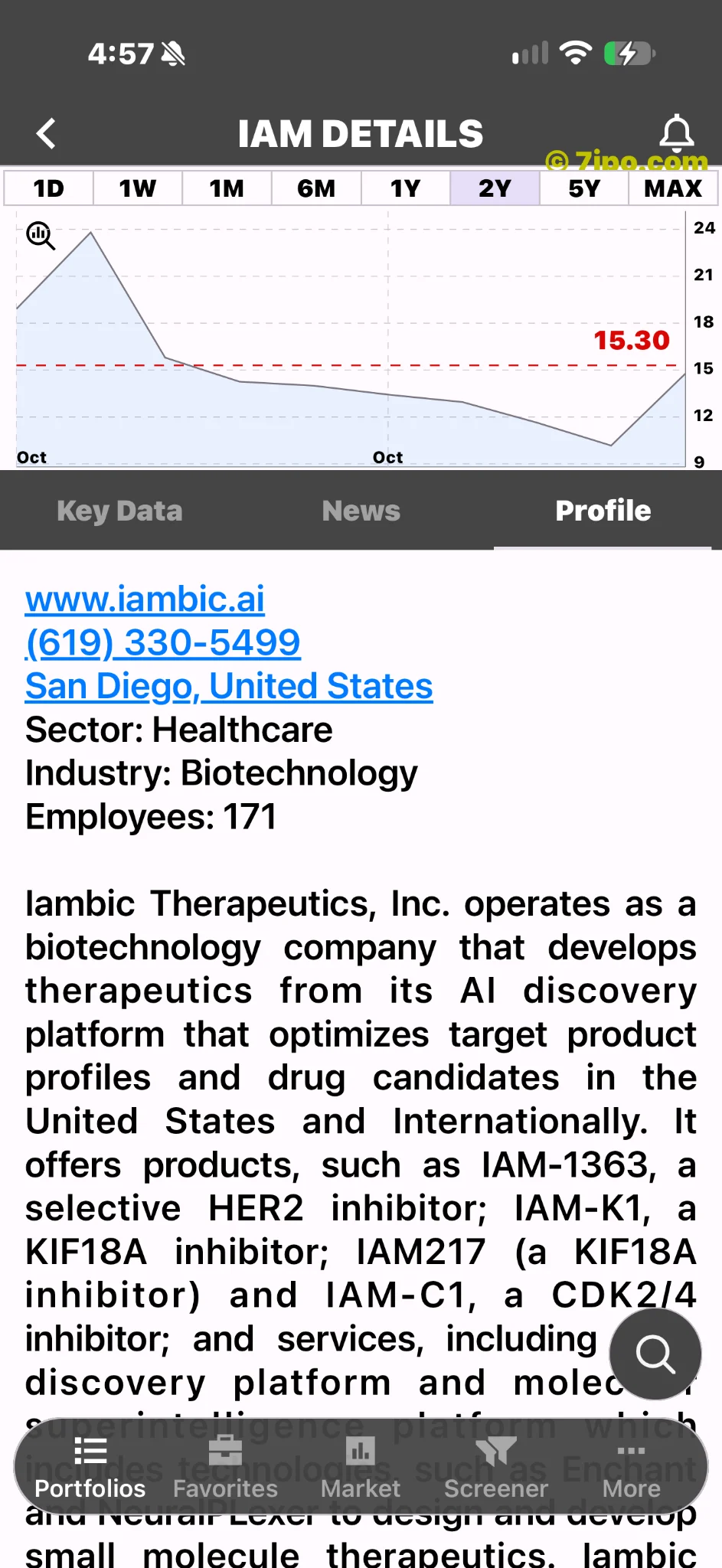
For an AI-focused developer, technological progress and medical progress are related but distinct. A system that proposes a molecule efficiently still needs that molecule to be tested. A compelling technology narrative should therefore be assessed alongside evidence about patients, not substituted for it. This is a general analytical distinction, not a conclusion that Iambic’s approach will succeed or fail.
Collaboration revenue is another separate measure. It demonstrates revenue recognized under partnerships, but it should not be confused with sales from an approved treatment. Nor should a six-month revenue figure be presented as a full-year result. Keeping the period and revenue category visible helps readers understand the scale of the business without overstating its maturity.
What the chart cannot settle
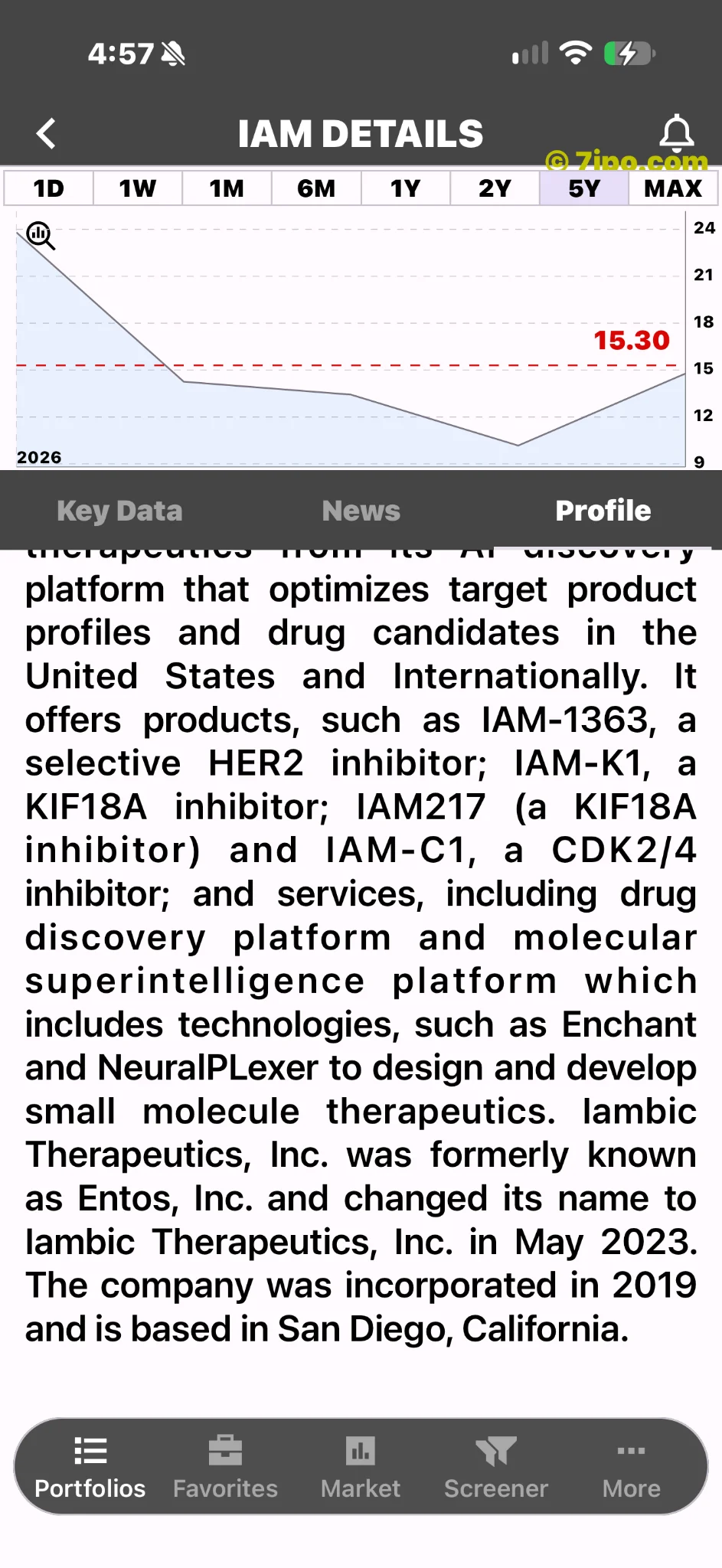
A percentage gain measures a price comparison, not the probability that a drug will work. Likewise, the distance from the offering price is not a valuation model. Neither number captures the full range of possible clinical outcomes or tells an individual investor what price is appropriate.
For follow-up coverage, the useful questions concern the quality and maturity of evidence: what has actually been measured, which claims remain expectations, and what additional testing is needed? Analyst enthusiasm can be part of the market story while those questions remain unanswered. The strongest reading of this snapshot is therefore curiosity with discipline, rather than treating a rising quote as confirmation of the scientific thesis.
Explore the supplied chart through IPO-Stocks.app. Image provenance: ©7ipo.com. Informational analysis, not personalized investment advice.