Office Properties Income Trust owns office buildings, not a newly invented business looking for its first customers. At September 30, 2026, its portfolio held 109 properties covering roughly 15.6 million square feet. Third-quarter rental income was $114.2 million. That is an established landlord with real operations, although its stock now represents a company reshaped by bankruptcy. The trust has no employees of its own; RMR provides management personnel and services.
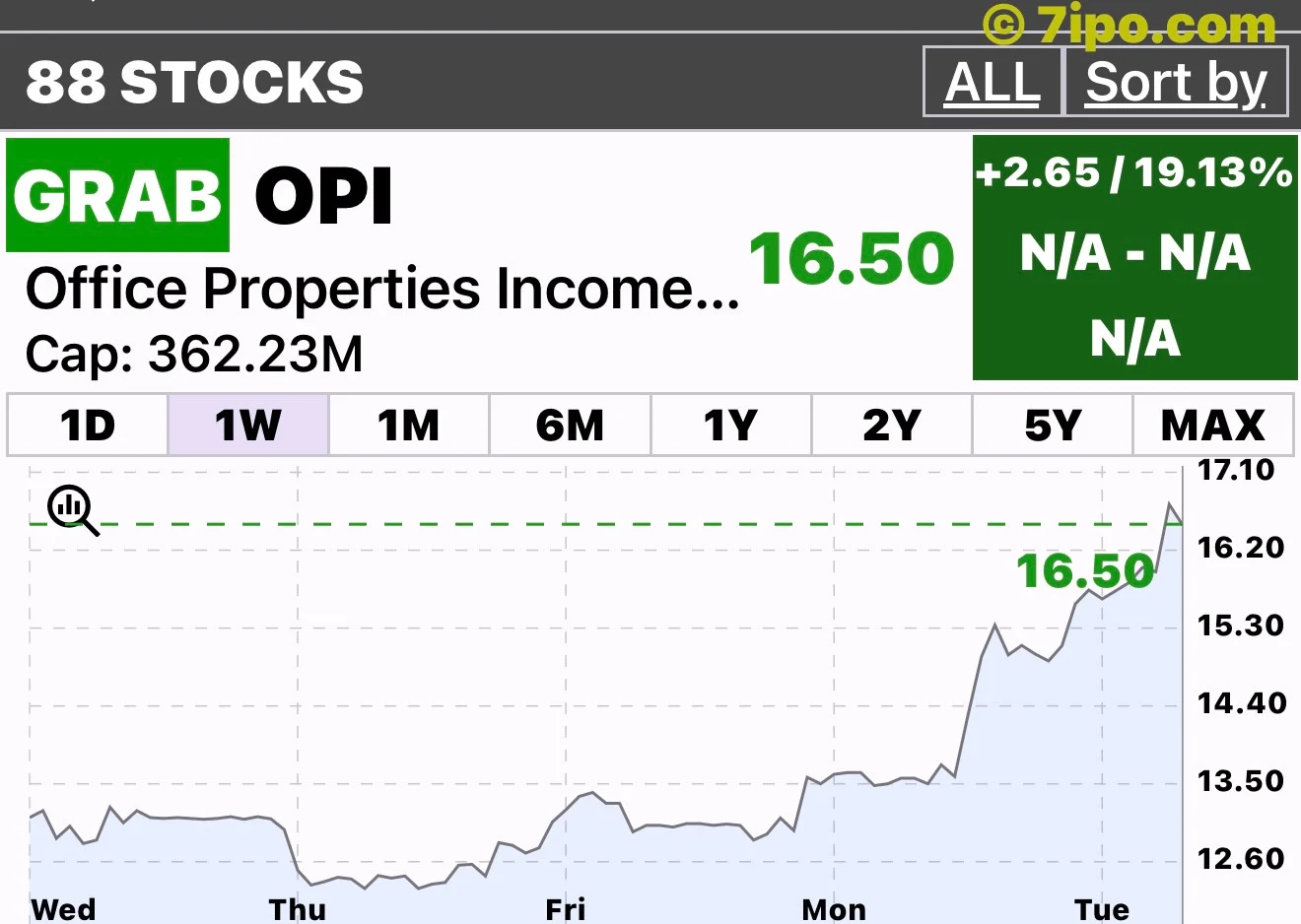
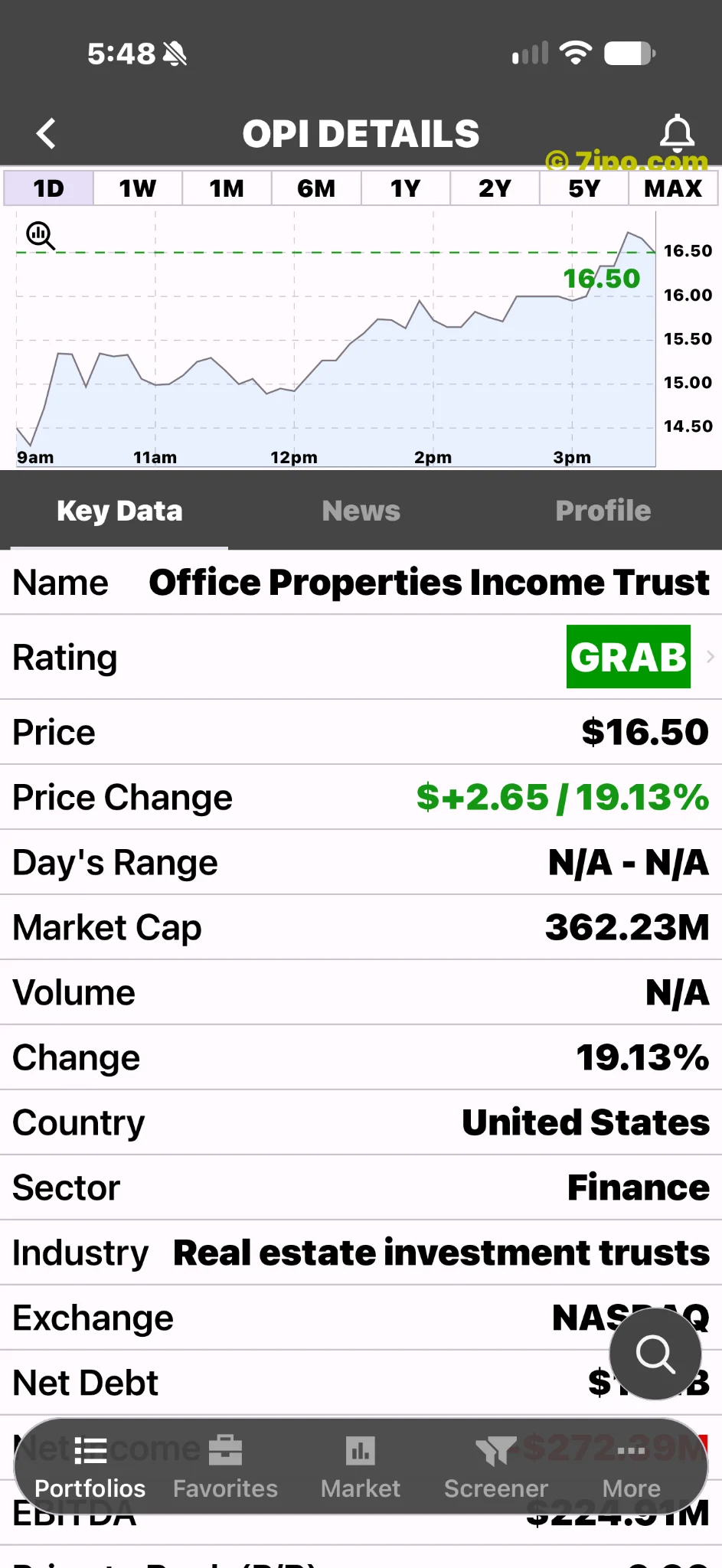
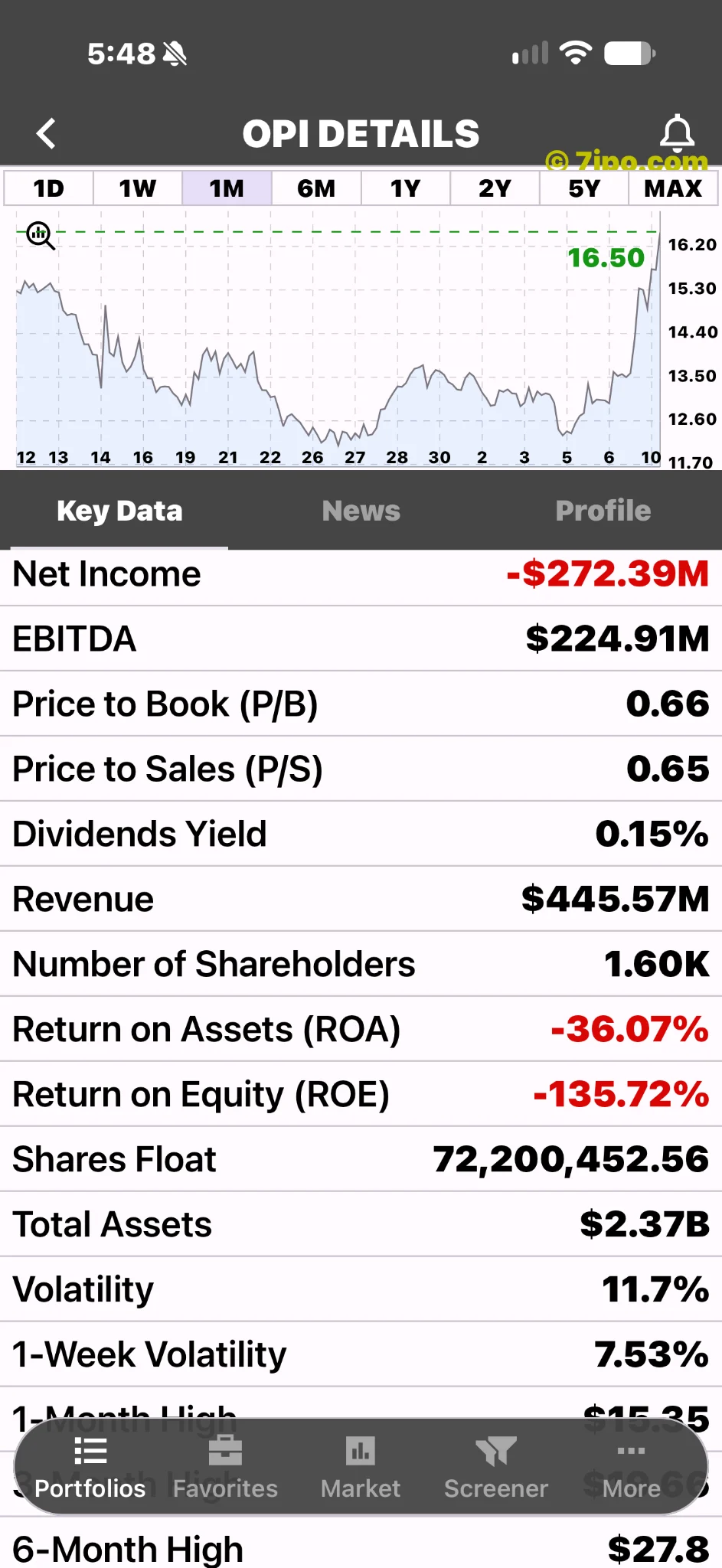
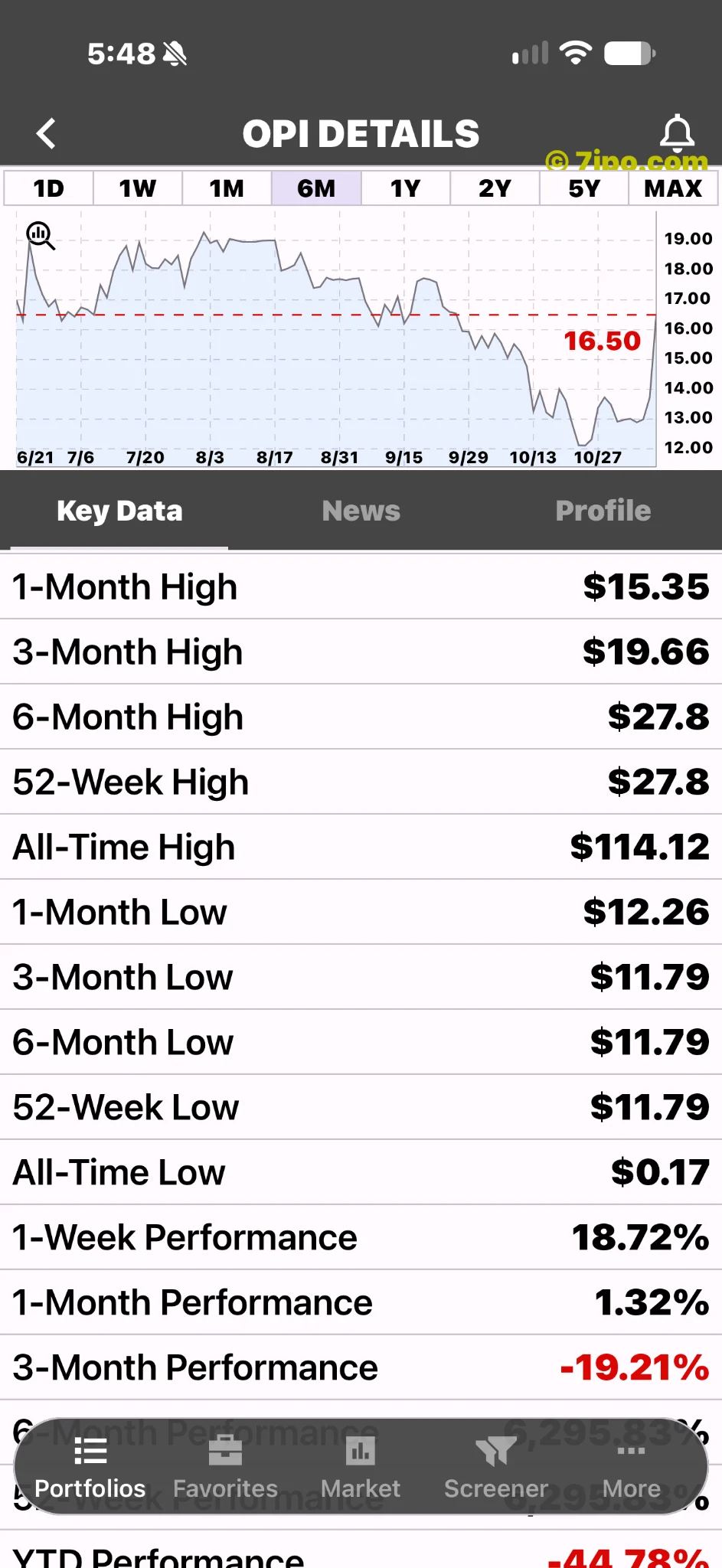
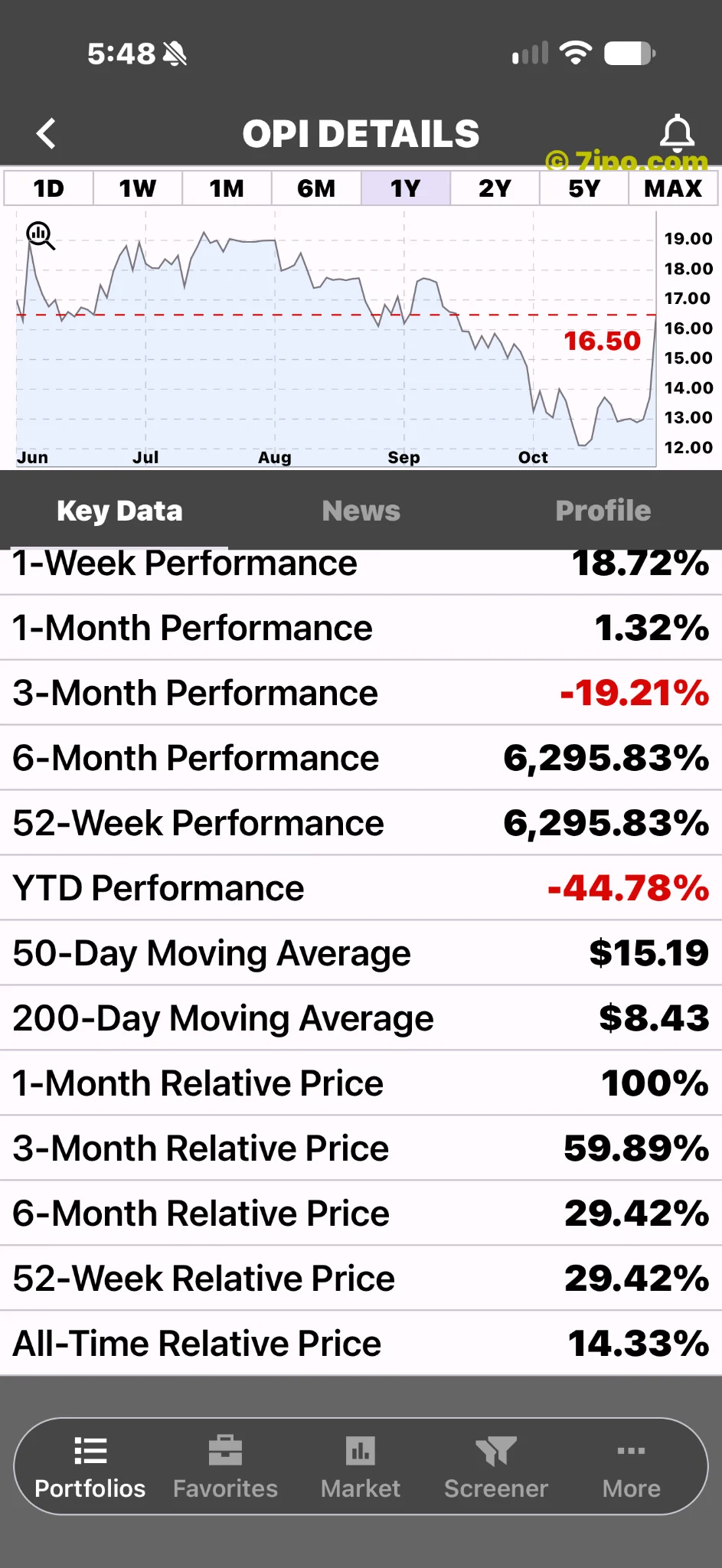
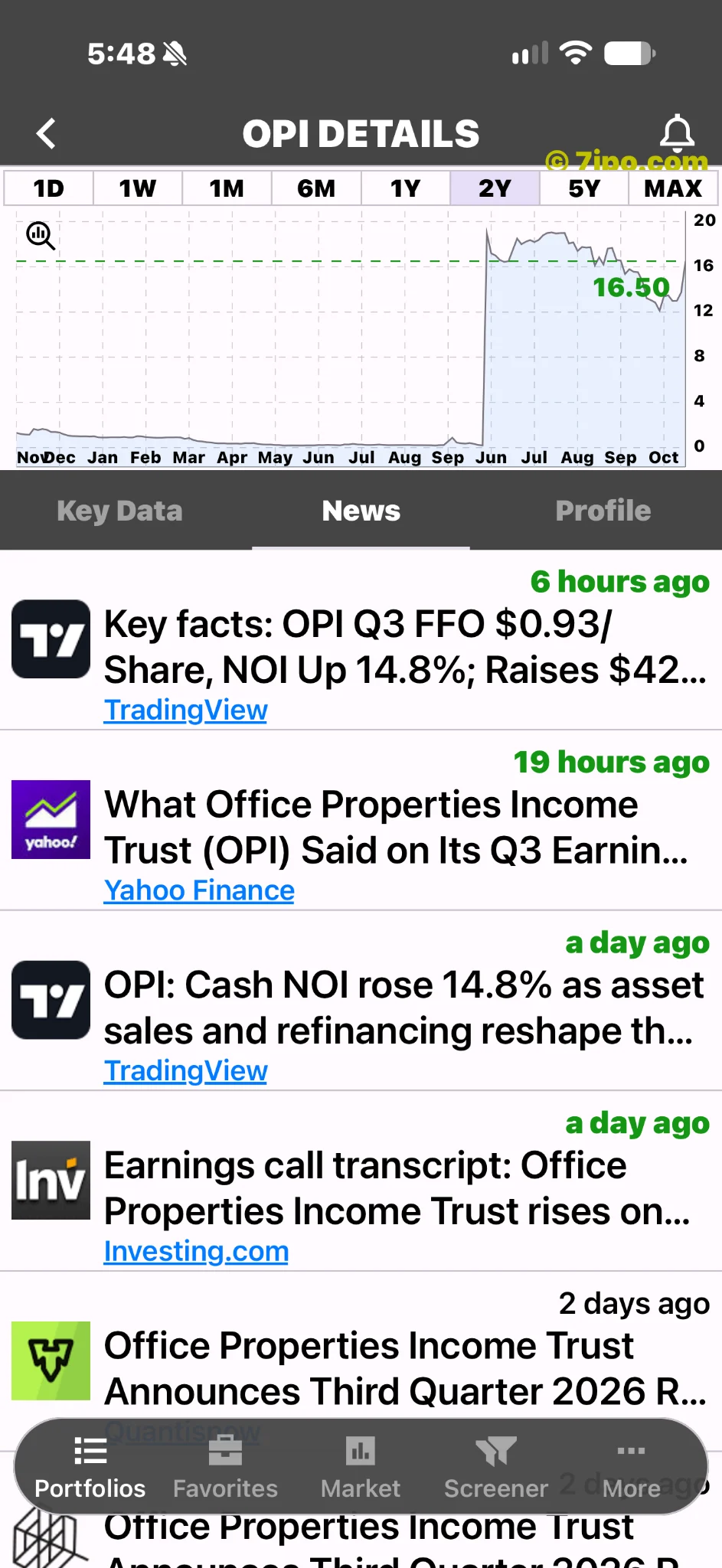
The screenshots supplied on November 11 display OPI at $16.50, up 19.13%. The one-week view ends Tuesday and the one-day view runs through an afternoon session, so this is a displayed snapshot gain, not a verified Wednesday premarket move. Volume and the trading range are marked unavailable. The screenshots do not establish the quote’s exact market timestamp.
A fresh operating update gives the rally context
OPI released third-quarter results on November 9 and held its earnings call November 10. Same-property cash net operating income increased 14.8% from a year earlier. Occupancy reached 88.8%, and property sales brought in cash. These are relevant developments for an office landlord trying to rebuild confidence.
The company also placed $425 million of secured notes to refinance nearer-term borrowing. Extending a financing runway is useful: it can give management more time to operate and sell buildings rather than negotiating under an immediate deadline. But expensive secured financing is not the same thing as an all-clear signal.
Our interpretation is that the results and refinancing provide a credible recent backdrop for renewed interest. They do not establish the cause of every percentage point in the displayed move. No separate November 11 announcement was verified that conclusively explains the screenshot.
The ticker survived. The old equity did not.
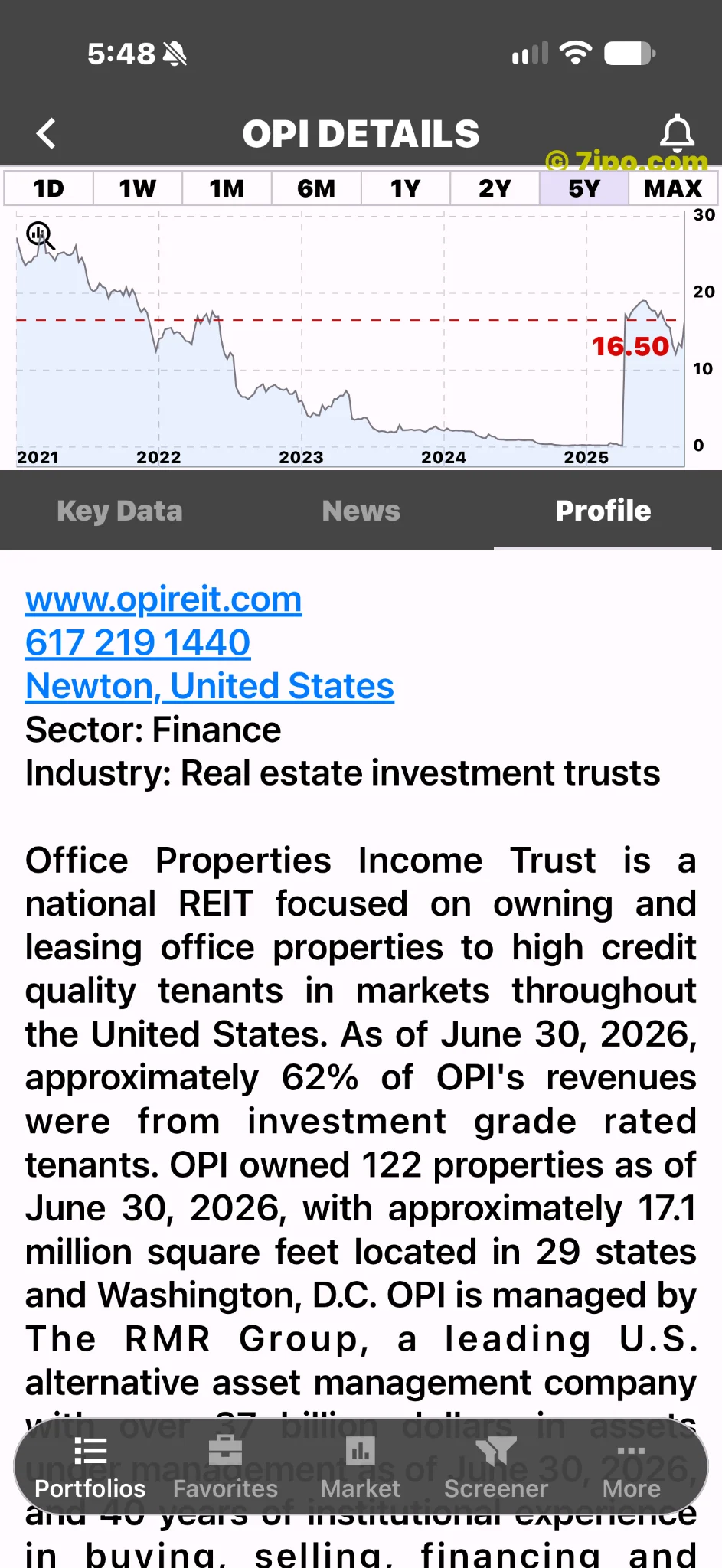
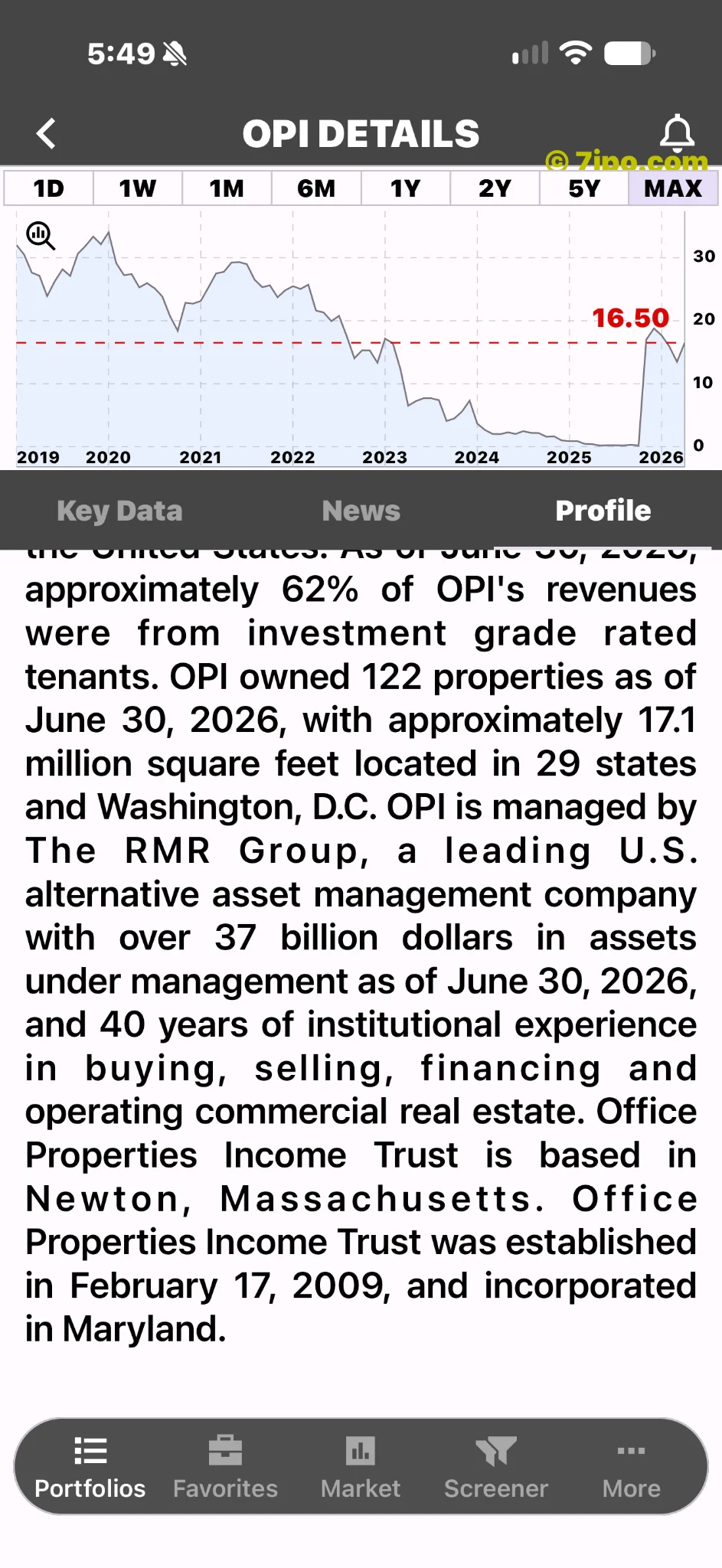
OPI emerged from Chapter 11 on June 17. Its previous common shares were canceled and new common shares were issued, with Nasdaq trading scheduled for June 18 under the same OPI symbol. The reorganization reduced debt by approximately $714 million.
That distinction matters more than a familiar ticker. A chart crossing the restructuring date may join two different equity histories. Investors should verify that prices, share counts and market capitalization describe the successor shares before making comparisons. This is a post-reorganization listing story, not a conventional first-time IPO.
Better breathing room is not the finish line
The encouraging part is that there are operating measures to examine, rather than only a rising quote. The caution is that property-level cash performance does not automatically become common-shareholder profit. Debt costs, vacant space, leasing expenses and asset-sale economics still matter.
We would judge the next chapter by sustained occupancy and recurring cash generation, not one morning’s percentage gain. A recovery stock can be interesting without becoming a proven recovery overnight.
The distinction is between financial survival and investment success. More time to execute a plan can improve the odds, but shareholders still need that plan to create value after financing costs. The next several reporting periods will be more informative than the size of a single price jump. A sensible reading of the rally therefore keeps two questions separate: whether the business is becoming more resilient, and whether the price already assumes too much progress.
Explore the app at IPO-Stocks.app. This article is market reporting, not a recommendation to buy or sell.