Cerebras Systems builds AI computing systems and sells cloud computing services. Its latest quarter shows a company growing quickly, but not yet profitably: for the three months ended September 30, 2026, it reported $210.8 million in revenue and a $161.2 million net loss. Working-capital loans totaled approximately $829.1 million at quarter-end. Those figures provide a more useful introduction than simply calling it another AI stock. Source: November 12 financial results.
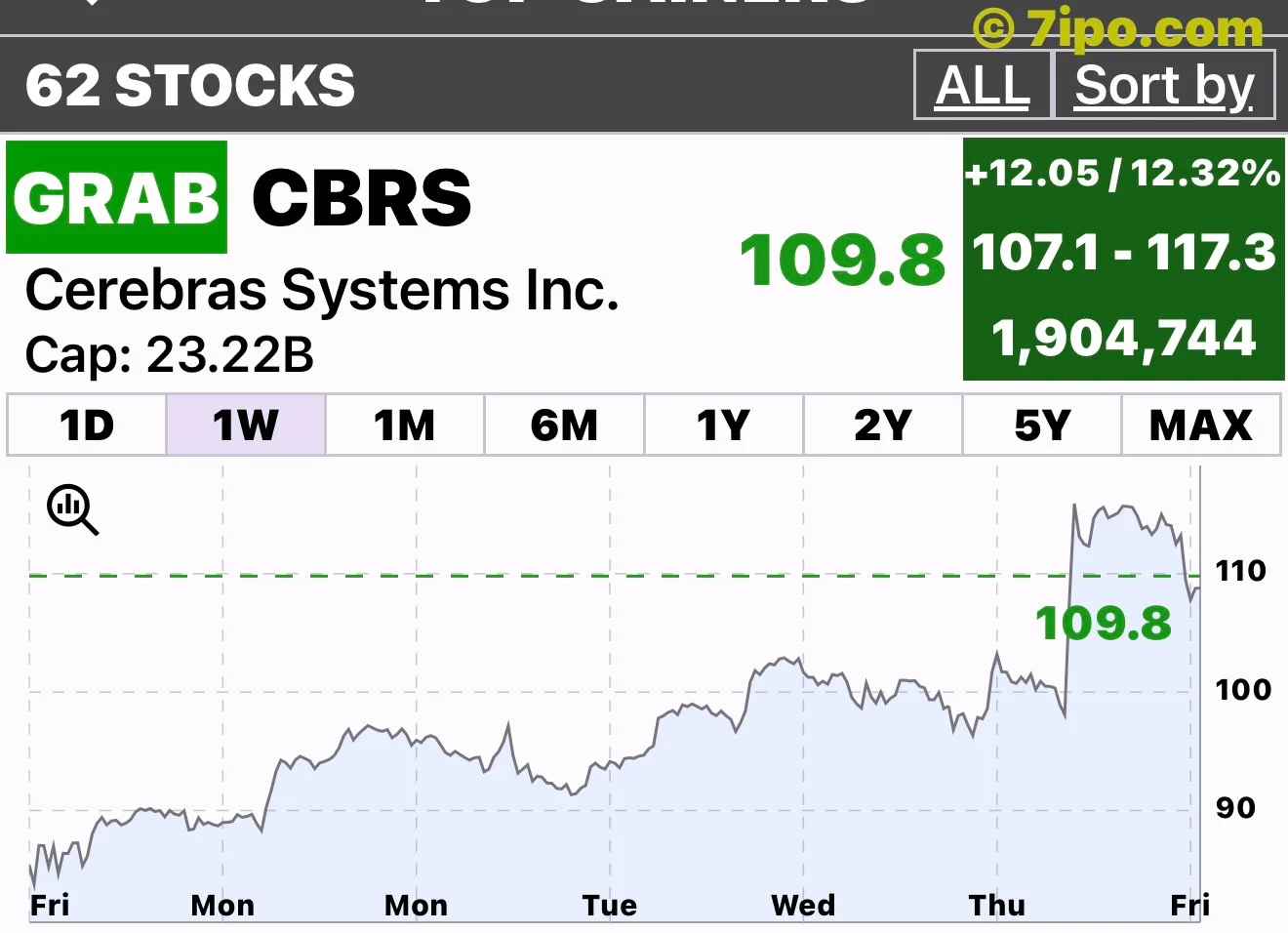
The supplied November 13 IPO-app snapshot showed CBRS at $109.80, up 12.32%. The longer-chart screen separately displays $109.60, reflecting a different snapshot. These are screenshot observations, not live executable quotes. A fresh earnings announcement the preceding evening gives the move a concrete news backdrop. It does not establish why every buyer bought, or guarantee that the early strength will survive the session.
The business behind the excitement is changing
The interesting development is the mix. Cloud and other services contributed $141.9 million, compared with $38.9 million a year earlier. Hardware revenue declined. Cerebras is therefore asking investors to assess more than the appeal of its physical computing systems: the story increasingly depends on customers paying to use computing capacity. Source: quarterly financial statements.
That distinction matters. Selling equipment and operating a service can create different relationships with customers, different spending needs and different financial risks. A cloud business may generate repeat usage, but investors should not treat repeat usage as guaranteed recurring revenue. Capacity must be available, customers must actually use it, and the price charged must eventually cover the cost of delivering the service.
This is the constructive part of the story: there is a measurable business underneath the AI enthusiasm. The harder part is deciding what that business will earn after the infrastructure bill is paid. Rapid sales growth answers one question about demand. It does not, by itself, answer the question about sustainable returns.
Read the forecast without changing its meaning
Cerebras forecast full-year 2026 non-GAAP Core revenue of $940 million to $960 million. Core is an adjusted measure; it is not interchangeable with reported GAAP revenue. The company's adjustments include customer-warrant amortization and certain pass-through data-center items. Source: guidance and reconciliation.
That is not a technical footnote to skip. A growth comparison becomes misleading when one period uses an adjusted figure and another uses reported sales. Readers should compare like with like, then ask why the adjustments exist. The forecast is management's expectation, not money already earned.
The same discipline applies to debt. Loan balances are obligations, whereas available borrowing capacity is permission to borrow. Neither should be confused with the company's total liabilities. Investors also need to distinguish cash that can be spent freely from restricted cash. A large financing cushion can buy time; it does not make an unprofitable expansion costless.
The latest week is not the whole trend

The supplied six-month view generally falls from its spring levels, despite several sharp rallies along the way. The latest month still shows pronounced weakness followed by an early-November rebound. The separate weekly chart makes that recovery much clearer, with a further jump late in the displayed week. This is a short-term recovery within a much weaker longer picture, not proof that the entire downtrend has ended. The latest quote line and the longer historical series are not synchronized observations, so they should not be used to manufacture a precise six-month return.
A rally with a real catalyst, and an unfinished test
The results offer a credible explanation for renewed attention: a stronger cloud contribution and a higher-looking growth trajectory give investors something tangible to debate. But the quarterly net loss is a reminder that a compelling growth story and a completed business model are not the same thing.
For now, the sensible test is whether future quarters turn more activity into healthier economics. Watch reported revenue, margins, cash consumption and financing obligations together, rather than letting one impressive sales number dominate the picture. This is news analysis, not a recommendation to buy CBRS.