Rank One Computing, which trades as ROC, sells computer-vision technology for identification, video analysis and digital evidence. It is a small operating business, not an AI heavyweight: third-quarter revenue was $8.0 million, with net income of $614,660. Its September 30 balance sheet showed $7.47 million in cash and zero revolving-credit borrowings. Those figures, reported November 12 for the quarter ended September 30, give investors something more concrete to examine than an artificial-intelligence slogan.
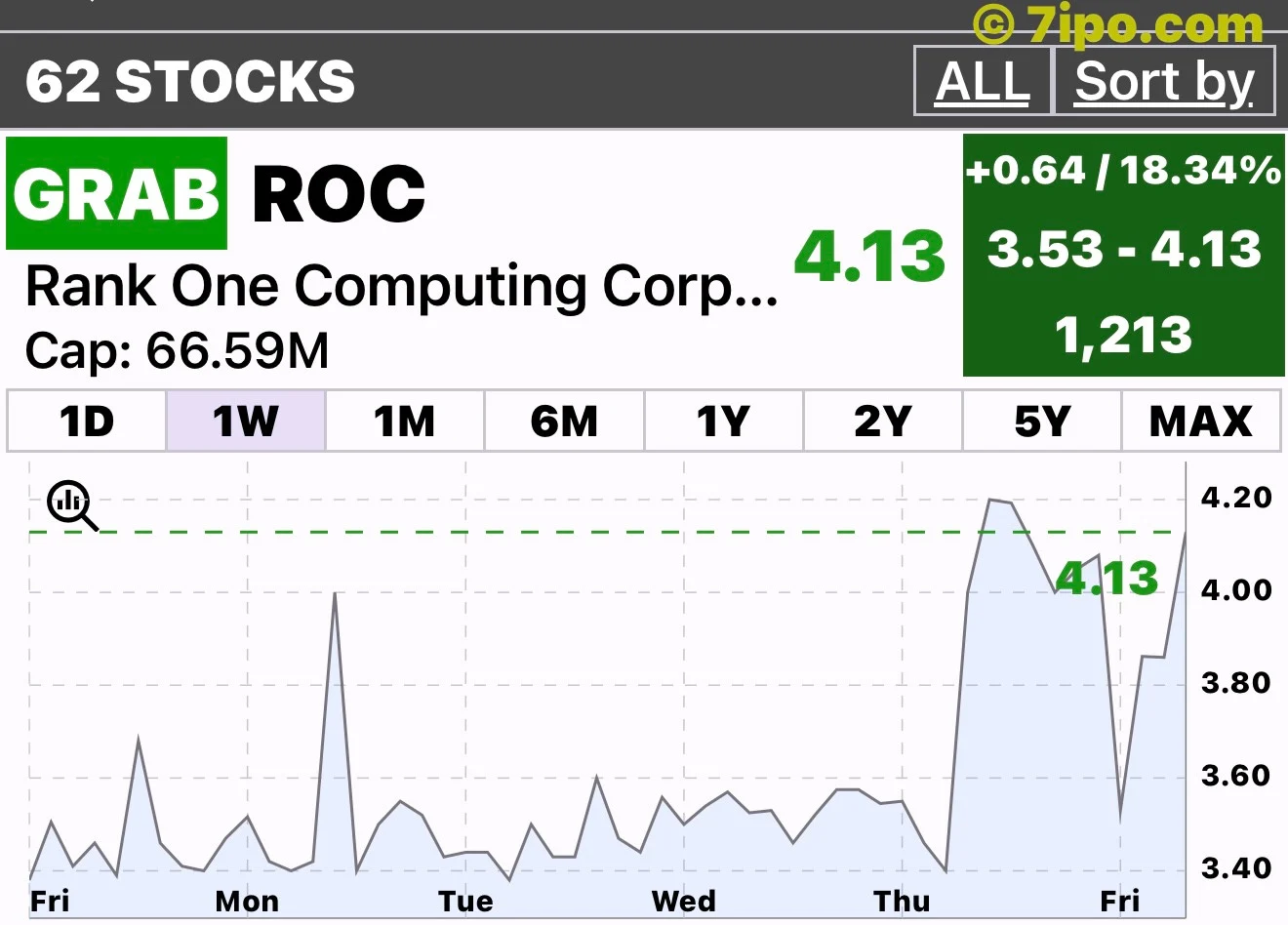
The supplied November 13 premarket screenshot showed ROC at $4.13, up 18.34%, on displayed volume of 1,213 shares. That is a snapshot, not a closing price or evidence that the entire market has reached a lasting verdict. With so few shares showing, an eye-catching percentage can arrive before meaningful liquidity does.
A plausible catalyst, not a mystery solved by the chart
The clearest fresh company news is ROC’s November 12 earnings release. Revenue rose 50% year over year and the company moved from a quarterly loss into profit. Its SEC filing confirms the report’s timing. The release offers a credible immediate explanation for renewed attention, although it cannot establish why every buyer entered an order.
The encouraging part is straightforward. A young public company selling AI tools has demonstrated that it can produce a profitable quarter. That gives the investment story a testable business milestone. Investors can now ask whether customers are buying enough to support expenses, rather than discussing only the possible size of a future market.
But a milestone is not a destination. One strong reporting period does not tell us how reliably orders will recur, how evenly revenue will arrive or how much the next stage of growth will cost. Treating a profitable quarter as proof that the difficult work is finished would turn a legitimate achievement into an exaggerated claim.
Profit and cash are telling different stories
There is a harder number underneath the celebration: operations consumed $9.45 million of cash during the first nine months. Accounts receivable reached $11.10 million. These are different periods and measures from quarterly earnings, so they should not be casually subtracted from one another. Together, however, they make collecting customer payments an important part of the next chapter.
An invoice can support reported revenue before money arrives in the bank. That does not automatically mean something is wrong. It does mean investors should watch whether the gap closes. A business that converts its growth into cash gains more freedom to invest; one that repeatedly needs outside financing gives shareholders another risk to price.
The absence of revolving-credit borrowings is welcome, but it is not permission to call ROC liability-free. Obligations, operating expenses and acquisition commitments still matter. The useful question is whether the financial cushion is becoming more durable as the company expands.
The big contract number needs a smaller-print reading
ROC describes a Justice Department contract with an eight-year potential value of $64.3 million, including an initial one-year base of approximately $7.4 million. The ceiling is not guaranteed revenue. Future options and funding matter. Its August acquisition of Zuccaro Technical Consulting also adds an integration task alongside the growth opportunity.
Government work can validate a supplier’s capabilities, but customers with formal budgets and procurement processes do not turn a contract headline into immediate cash. The attractive scenario is repeat delivery, timely collection and follow-on business. The less attractive scenario is uneven orders while the expense base keeps running. Both belong in the discussion.
ROC began Nasdaq trading in February 2026 after an IPO priced at $6 per share. For this recent listing, the next useful evidence is operational: another solid quarter, cash collection and disciplined integration. The latest earnings make the rally understandable. They do not make its continuation inevitable.
A bounce against a falling six-month backdrop
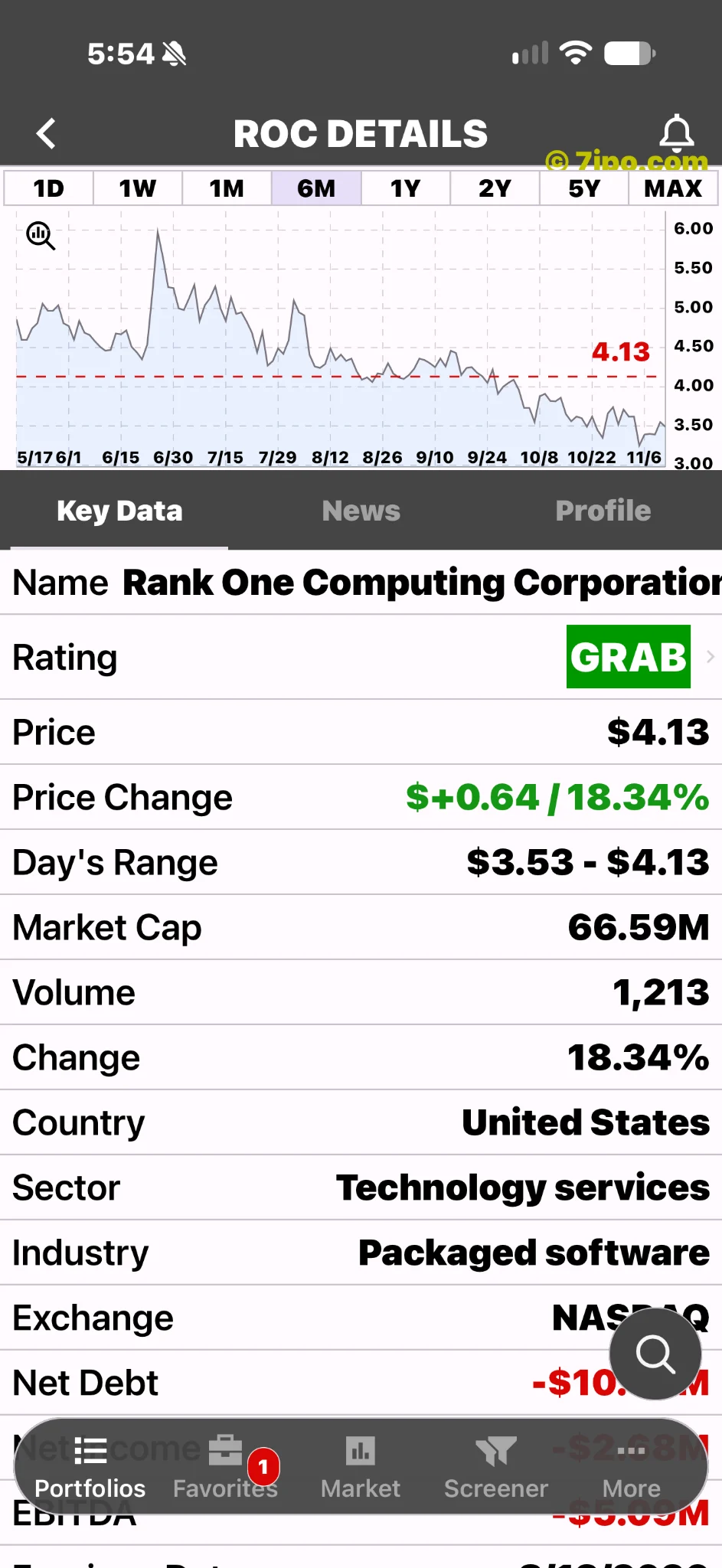
The supplied six-month chart generally falls: prices near $5 in May gave way to a late-June spike around $6, followed by lower levels toward roughly $3.50 in November. The latest month still looks weak rather than like an established recovery. The weekly chart, however, shows a sharp rebound near its right edge. That is a change in short-term behavior, not yet proof that the longer decline has reversed.
The distinction matters because the six-month plotted line ends below the $4.13 quote shown separately on the screen. That quote should not be mistaken for a completed six-month breakout. A stronger earnings report can change expectations quickly; establishing a lasting price trend takes more than a single premarket jump.