HawkEye 360 sells a way to understand activity that ordinary photographs cannot reveal: radio-frequency signals. Its satellites detect and locate emissions, while processing and analytics turn that information into intelligence for U.S. and allied defense customers. This is a specialized business, not a giant defense contractor. In the quarter ended September 30, 2026, it generated $59.3 million of revenue and a $163,000 net loss. At quarter-end it held $494.9 million in cash and equivalents, reported no long-term debt, and had drawn nothing on its $125 million revolving credit facility. Those figures come from its November 12 earnings release and accompanying quarterly filing.
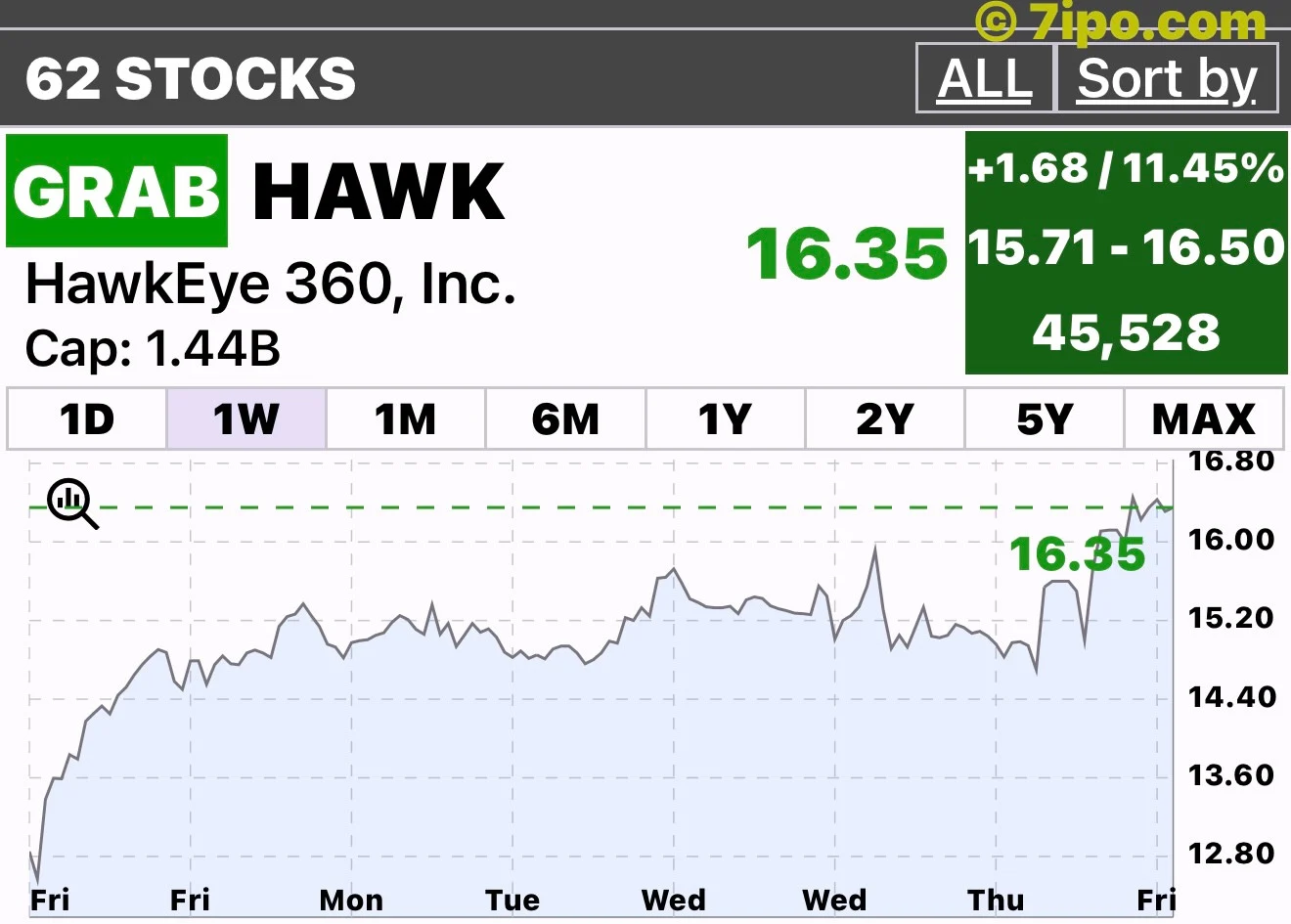
That backdrop helps explain why the newly public company attracted attention. The supplied November 13 premarket screenshot showed HAWK at $16.35, up 11.45%, with displayed volume of 45,528 shares. This is a screenshot snapshot, not a closing price or a live quote. The identifiable fresh catalyst was the results announcement after the previous session: higher sales, rising international demand and an upgraded full-year outlook. The timing supports that connection, without proving what motivated every buyer.
The headline is strong. The details are more interesting.
Revenue increased 84% from the previous year’s quarter. Management also raised its 2026 revenue outlook to $225 million–$227 million and its adjusted EBITDA forecast to $38 million–$40 million. That is a tangible improvement in expectations, rather than an announcement that merely promises a large market someday.
But calling the entire 84% increase organic growth would be wrong. The quarterly filing says Innovative Signal Analysis, acquired in December 2025, contributed $19.5 million of quarterly revenue. That accounts for much of the company’s $27.1 million year-over-year increase. Meanwhile, U.S. government and other revenue outside that acquisition declined by about $2.5 million because of lower radio-frequency data sales.
The brighter underlying development was international revenue: $23.3 million, up 76%. The filing attributes that increase to stronger radio-frequency data sales to both new and existing customers. This is the more persuasive part of the growth story. Buying another business can enlarge reported sales quickly; winning additional demand for the existing service provides a different kind of evidence.
Contracts create opportunity, not automatic profits
The company reported $300.3 million in backlog at September 30, compared with $292.2 million at June 30. It also described $54 million in new multiyear awards involving 11 allied partners and nations during the quarter, followed by $135 million of global contract signings after quarter-end.
Those numbers suggest a broader commercial opportunity, but they are not interchangeable with revenue already earned or cash already collected. Contract timing, performance obligations and potential cancellations still matter. Backlog should not be added to current sales as if it were money already in the bank.
Two satellite clusters launched in October could support more frequent observation and additional customer missions. Communications with all six satellites had been established, according to the release. However, the expected benefits depend on commissioning; investors should not treat planned capacity improvements as fully delivered results.
The latest rebound is not the whole chart
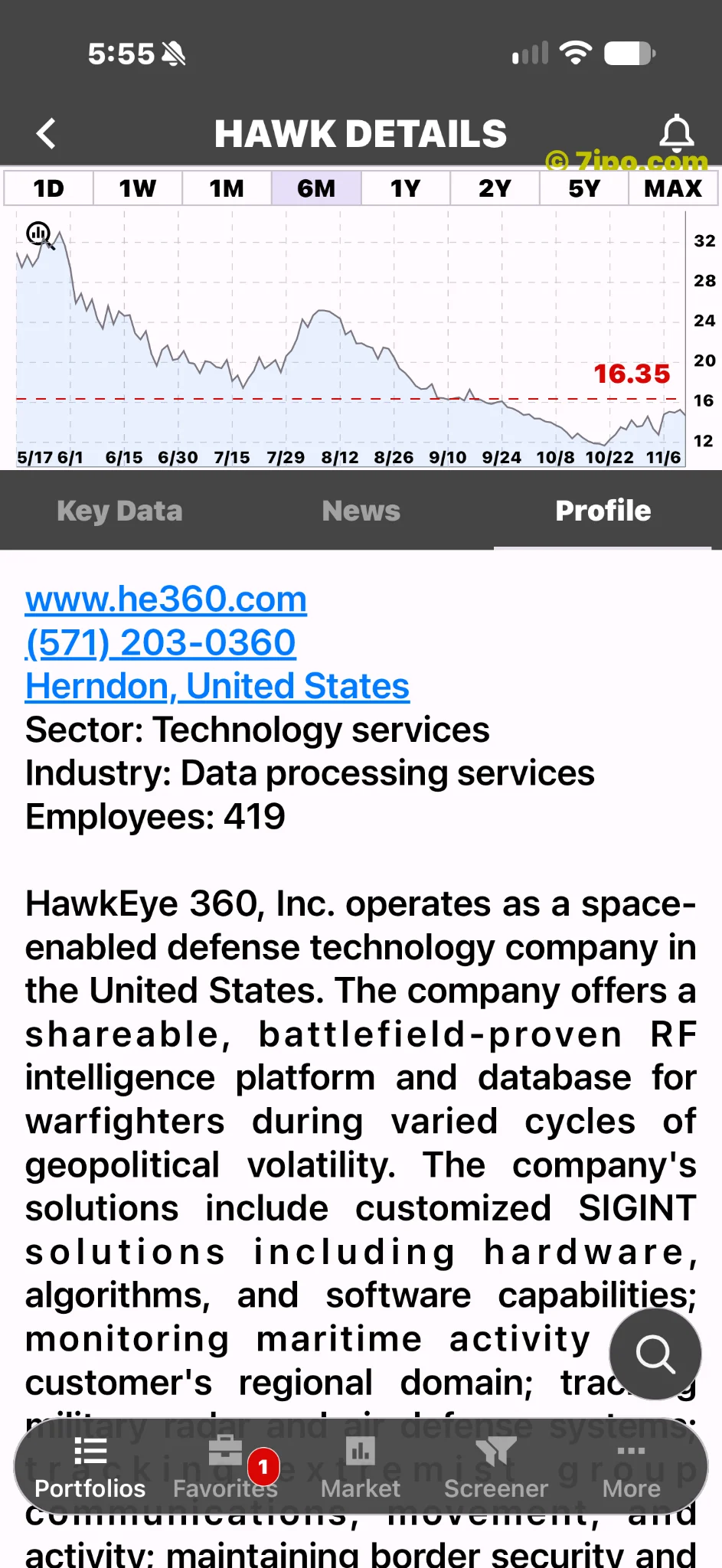
The supplied six-month chart tells a less comfortable story than the latest price jump. The stock generally fell from around $30 in May toward $12 in October, despite a summer rebound. The most recent month looks different: prices began recovering from the October lows, and the one-week chart shows a clear upward move. That is encouraging short-term momentum within a much weaker longer-term picture, not proof that the entire downtrend has reversed. The six-month plotted series and the newer $16.35 quote should not be treated as identical endpoints.
A stronger balance sheet does not erase the earnings test
Adjusted EBITDA reached $13.3 million, but that non-GAAP measure is not the same as net profit. The company’s small quarterly net loss contrasted with $1.7 million of net income a year earlier. Operating cash flow was $9.6 million; after satellite and equipment purchases, its defined free cash flow was only $137,000.
The substantial cash balance provides flexibility. It also reflects IPO financing, not simply cash accumulated by selling services. HawkEye 360 began trading on May 8, and its offering raised $478.4 million before underwriting discounts and offering expenses. Proceeds helped repay outstanding loans.
The constructive reading is that stronger international demand and a raised outlook gave investors new reasons to reconsider HAWK. The caution is that acquisition-driven growth, government contract execution and the cost of expanding a satellite network still deserve scrutiny. A premarket rally can signal changing expectations; it cannot by itself establish a durable business turnaround or a sustained chart uptrend.
Sources: November 12 earnings release; September 30, 2026 Form 10-Q, especially Notes 3 and 7 and management’s revenue discussion. Market snapshot: the supplied November 13 premarket IPO App screenshot. This article is informational, not a recommendation to buy or sell.