Liftoff Mobile helps app developers find users and make money from advertising. It is not an experimental company waiting for its first meaningful sale: the mobile-advertising platform reported $237.5 million of revenue in the quarter ended September 30, 2026. Its latest results also carried a striking contrast: $86.7 million in net income, but approximately $1.407 billion in debt carrying value, including the current portion. Growth is arriving with a substantial financial obligation still attached. Liftoff’s November 12 earnings release
That combination makes LFTO more interesting than a simple “AI stock jumps” headline. App advertising is a competition for attention, and a platform earns its place by helping customers spend advertising dollars effectively. The investment question is whether that service can produce repeatable, profitable growth rather than a burst of enthusiasm around fashionable technology.
A fresh earnings report, not just a moving ticker
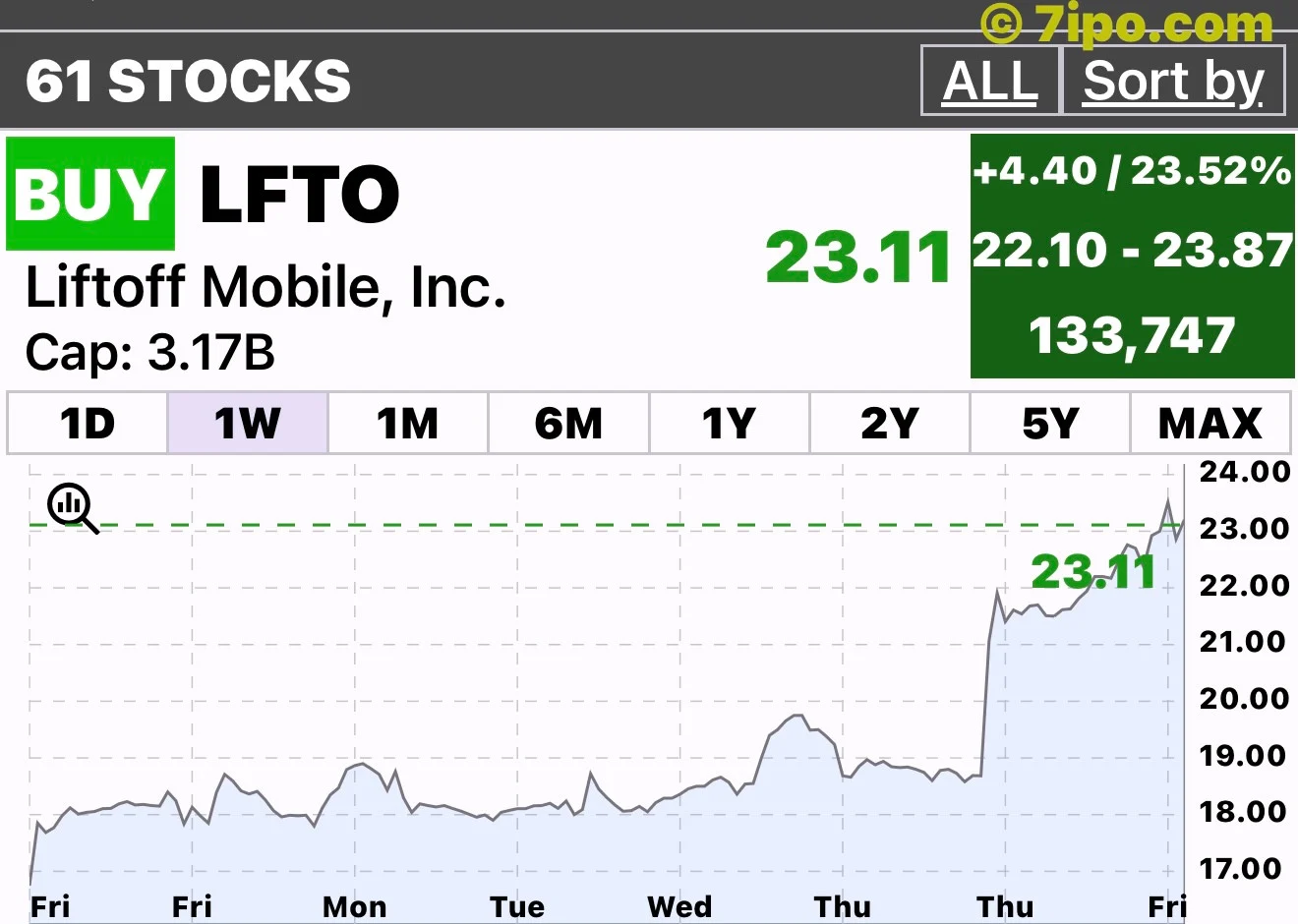
The supplied November 13 premarket screenshot with the one-week view selected showed LFTO at $23.11, up 23.52%, with displayed volume of 133,747 shares. Those are a captured app snapshot, not a current executable quote or the day’s final result.
The clearest fresh development was the previous evening’s quarterly report. Revenue rose 32% year over year, while adjusted EBITDA increased 45% to approximately $145 million. Management projected fourth-quarter revenue of $244 million to $249 million. This offers a concrete explanation for renewed interest: investors received evidence of growth alongside a forecast for more sales in the next quarter. It does not establish the motives behind every trade. Company results and outlook
The encouraging part is not merely that revenue increased. A business becomes more compelling when additional sales can translate into a larger earnings contribution. That is the attraction of operating leverage. But the reverse also matters: if customer spending weakens, the machinery supporting that growth does not necessarily become cheaper overnight.
Profit deserves a closer reading
Net income and adjusted EBITDA are different measurements. The former follows GAAP accounting; the latter removes specified expenses and other items. Neither should be casually substituted for money available to shareholders.
Reported net income included roughly $15.8 million of gains from revaluing contingent consideration and earnout liabilities. Cash was $385.7 million at September 30. Those details matter because an accounting gain is not a new advertising sale, while cash and debt influence how much flexibility a company has when conditions change. Financial statements accompanying the release
This is not a reason to dismiss the quarter. It is a reason to separate the operating story from the accounting story. Good reporting should let readers see both, particularly when a dramatic percentage gain can make every number look like confirmation of the same bullish conclusion.
A rebound inside a damaged longer trend
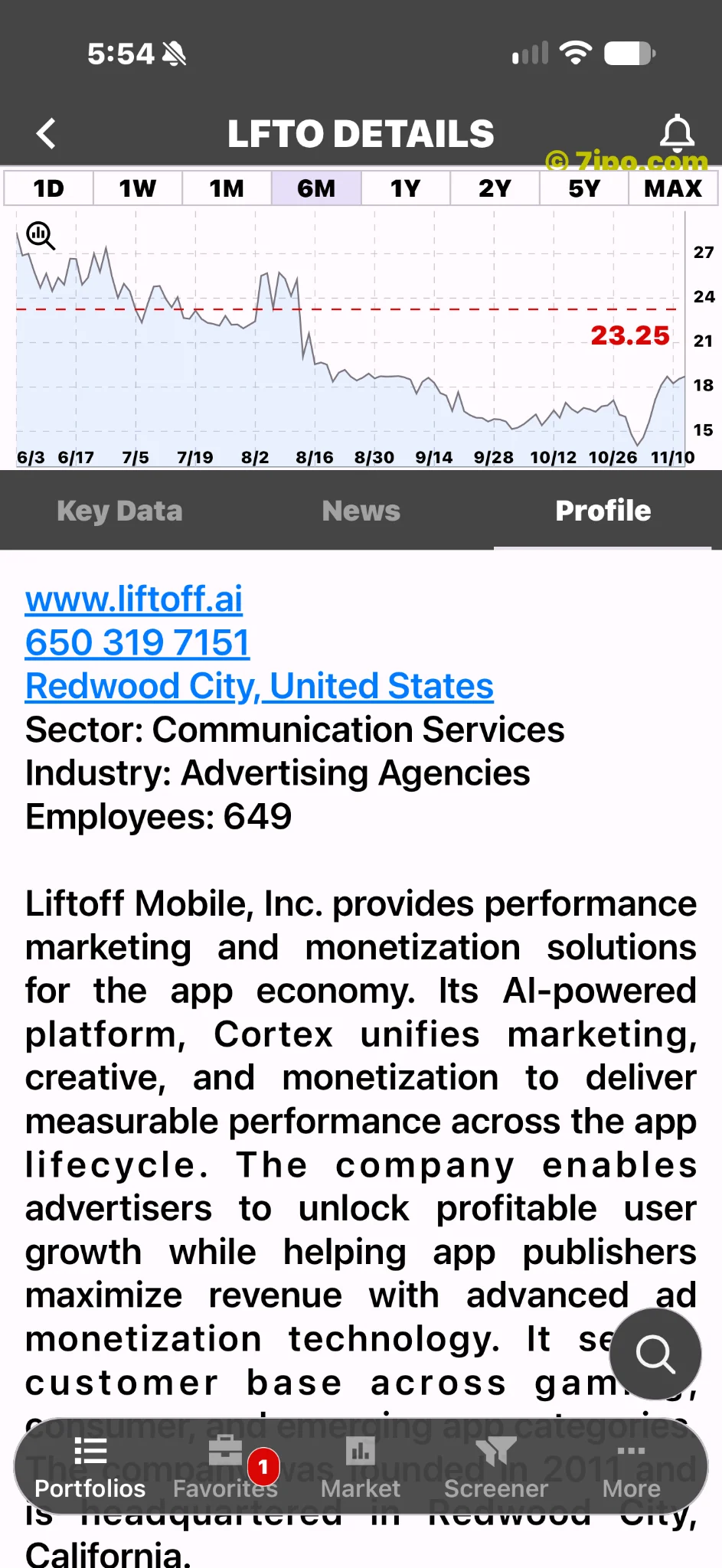
The six-month view tells a less celebratory story than the daily percentage gain. Its plotted history generally declines from June into the autumn, with a rebound after a late-October or early-November low. The most recent month therefore looks different from the longer decline, but a recovery from depressed levels is not yet proof of a complete trend reversal.
The two screenshots also capture different quote snapshots. The weekly image displays $23.11, while the six-month profile image carries a separate $23.25 quote label. Its historical price line ends around $18 to $19, not at that quoted level. The latest quote must not be treated as the final point of the older plotted series or used to calculate an exact six-month return. The weekly view does show the recent sharp upward step much more clearly.
The IPO price adds perspective
Liftoff began Nasdaq trading on June 4, 2026, and completed its IPO at $23 a share. It used $409.2 million of the proceeds to repay debt principal. At the supplied $23.11 snapshot, the stock was only slightly above that offering price, despite its large one-session advance. Liftoff’s quarterly SEC filing
That comparison is a useful antidote to excitement. A sharp daily rally and a large gain since an IPO are not the same thing. Nor does a return toward an offering price prove that a stock is cheap. Valuation still depends on the earnings and cash generation the business can sustain.
The next test is therefore straightforward: can Liftoff turn this quarter’s progress into a durable record while managing its debt? Advertising demand, platform rules and competition remain relevant risks. The earnings release gives the rally a tangible foundation. It does not make the outcome certain, and premarket enthusiasm should not be mistaken for a completed long-term trend.